← Back to library
Skiing·Warm-Up
·7 min read

Skiing Warm-Up Stretches: 15 Dynamic Moves Before You Drop In

A dynamic skiing warm-up must avoid prolonged static stretching, which reduces quad power output. Instead, use leg swings, walking lunges, lateral bounds, and trunk rotations to raise core temperature, prime neuromuscular firing, and prepare the joints for the eccentric demands of alpine turns.

Static stretching before skiing is counterproductive. Research shows that prolonged static holds acutely reduce force production in the stretched muscle, a serious problem when your quads need to generate explosive eccentric force through every turn. The FIS 2024 Consensus and ACSM both recommend a dynamic, RAMP-style warm-up before alpine skiing. Every movement below is dynamic.

The Recommended Routine

1
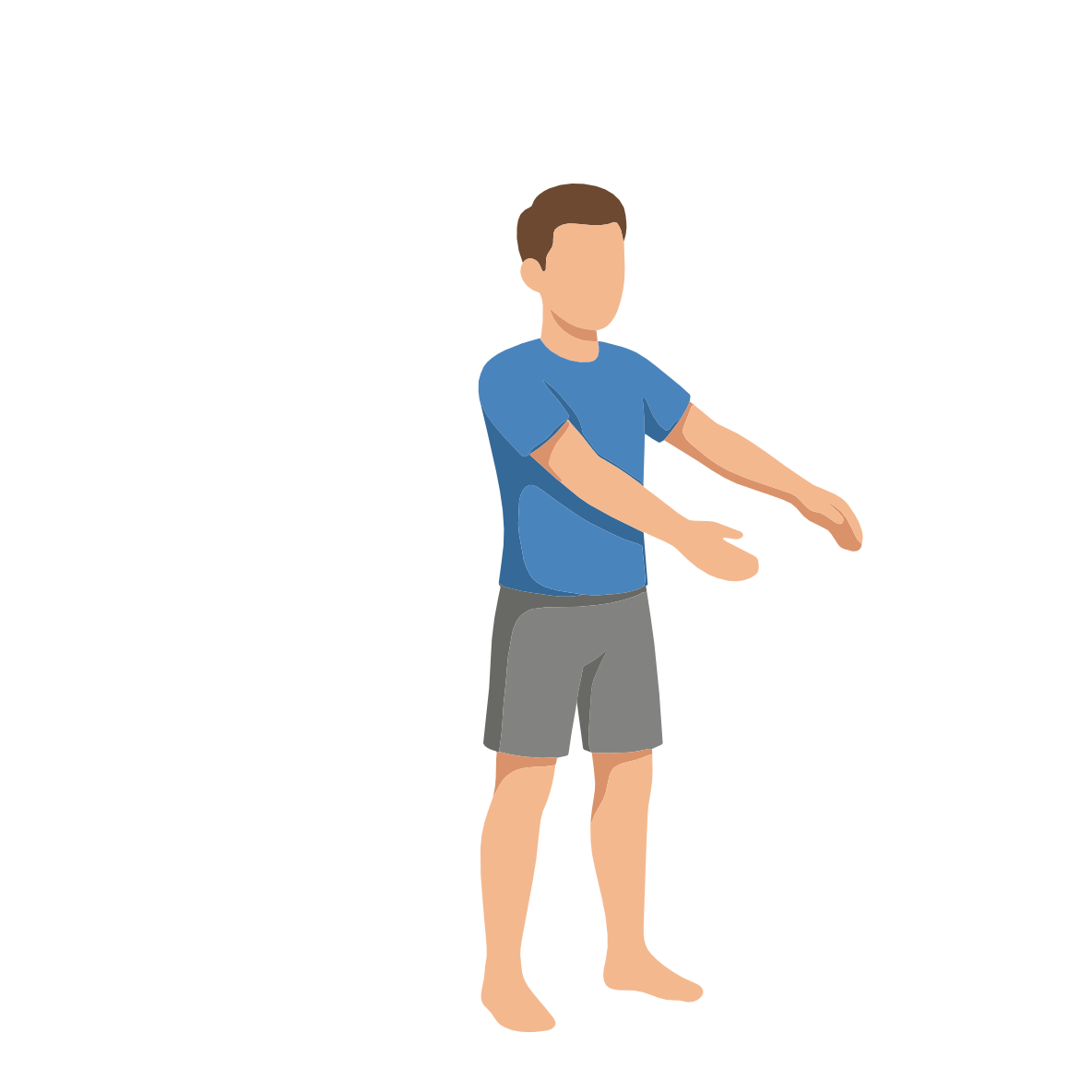
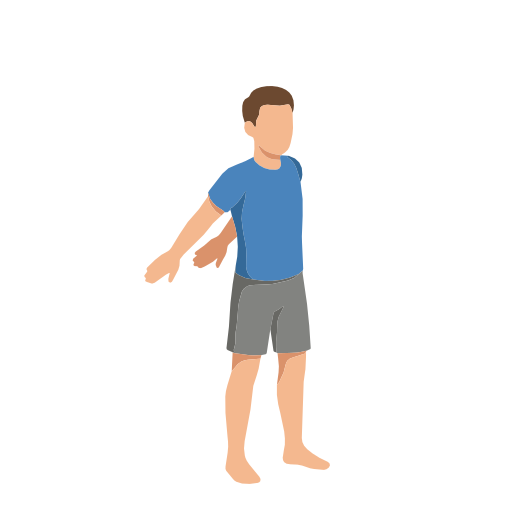
Arm Circles
Deltoids, Rotator Cuff, and Upper Back · 15 reps forward, 15 reps backward
  1. Stand with feet shoulder-width apart and arms extended to a 'T'
  2. Begin with large, controlled circular motions
  3. Keep your core engaged and posture upright
  4. Reverse direction halfway through
Why it works
Shoulder dislocations and skier's thumb are among the most common upper-extremity ski injuries. Arm circles prime the rotator cuff to absorb a fall and prepare the shoulder girdle before pole planting begins.
2
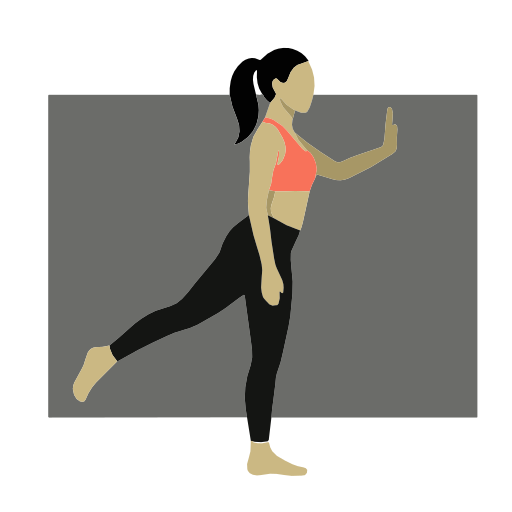
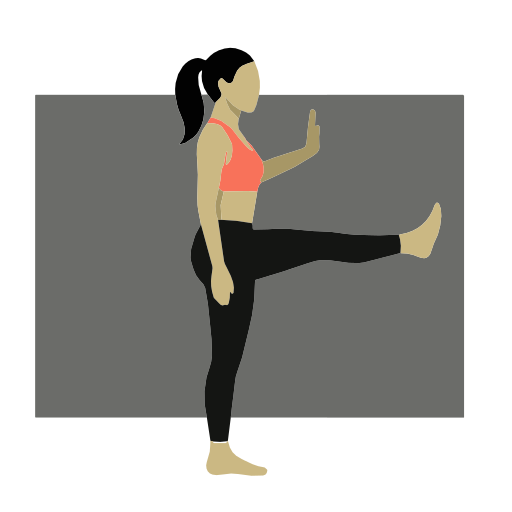
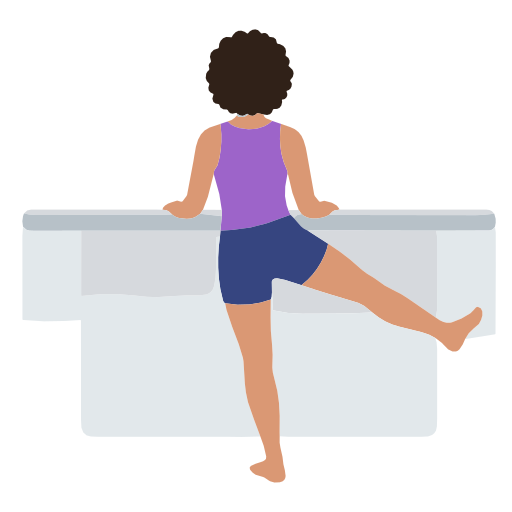
Forward/Backward Leg Swings
Hip Flexors and Hamstrings · 15 reps per side
  1. Stand sideways to a wall or fence and hold on for balance
  2. Keep your torso upright and core engaged
  3. Swing the outside leg forward and backward in a smooth pendulum motion
  4. Gradually increase the height of the swing
Why it works
Skiing is continuous hip flexion and extension through every turn. Leg swings warm the rectus femoris, which research identifies as the primary turn driver in alpine skiing, without the power-reducing effects of static stretching.
3
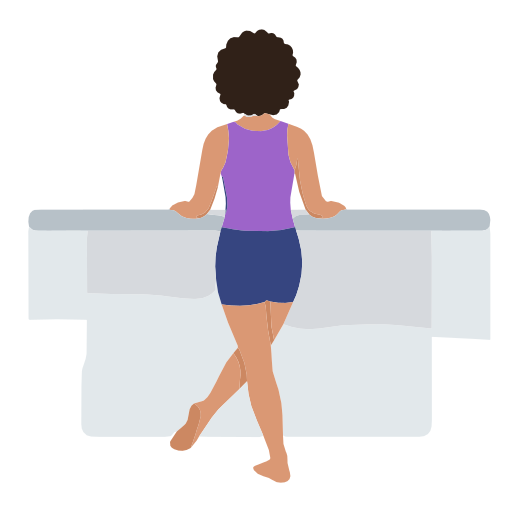
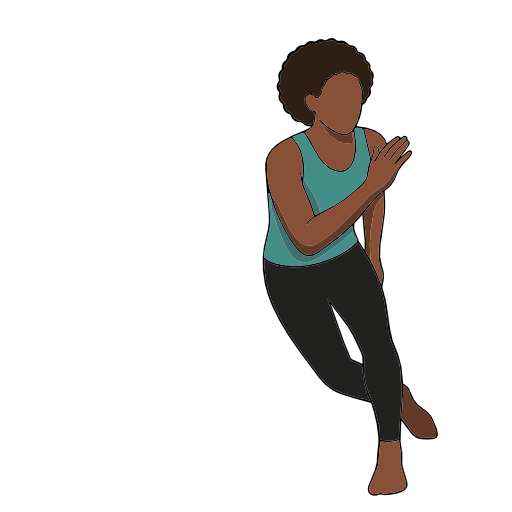
Lateral Leg Swings
Hip Adductors and Glute Medius · 15 reps per side
  1. Face a wall or fence and hold on for balance
  2. Swing one leg side to side across the front of your body
  3. Keep the torso relatively still
  4. Start with small swings and gradually increase height
Why it works
Carving and edge-to-edge transitions load the adductors eccentrically. Dynamic lateral swings prepare them without static-stretch power loss, critical before the first run.
4
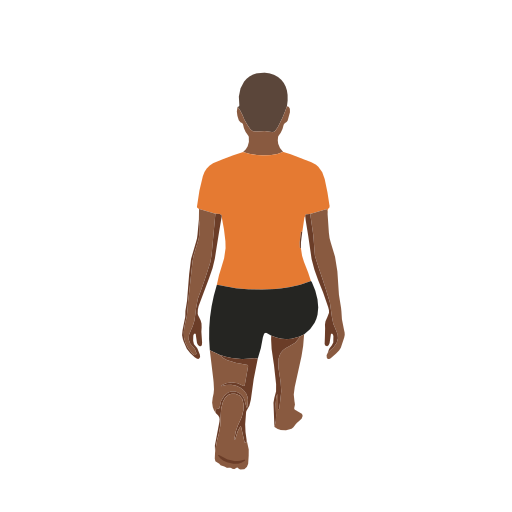
Walking Lunges
Quads, Glutes, and Hamstrings · 10 reps per leg
  1. Step forward and lower your back knee toward the ground without touching
  2. Keep your front knee stacked over your ankle, not past your toes
  3. Drive through the front heel to step into the next lunge
  4. Keep your torso upright and core engaged
  5. Swing arms naturally for balance
Why it works
Primes the quads for the massive eccentric load of a ski turn. The forward lunge pattern closely mimics the knee flexion angle of skiing's athletic position.
5
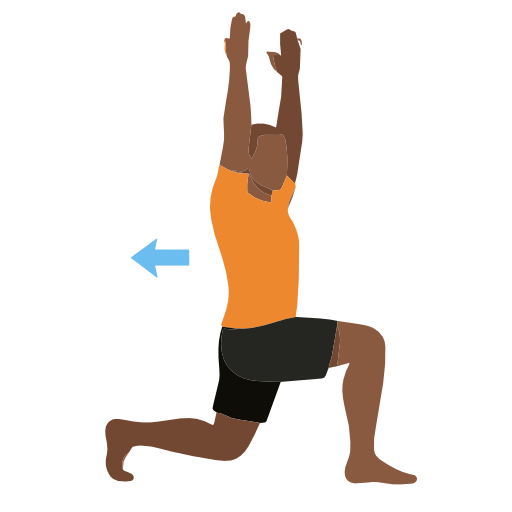
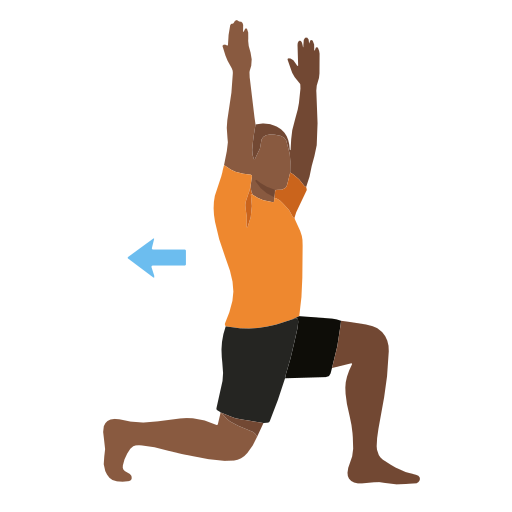
Reverse Lunge with Overhead Reach
Hip Flexors, Quads, and Thoracic Spine · 10 reps per leg
  1. Step backward into a lunge position, dropping the back knee close to the ground
  2. As you lunge, reach both arms straight overhead
  3. Push off the front heel to return to standing
  4. Alternate legs
Why it works
Opens the hip flexors and thoracic spine simultaneously, directly countering the forward-flexed boot stance that skiers hold for hours. Also primes the overhead position for pole-plant timing.
6
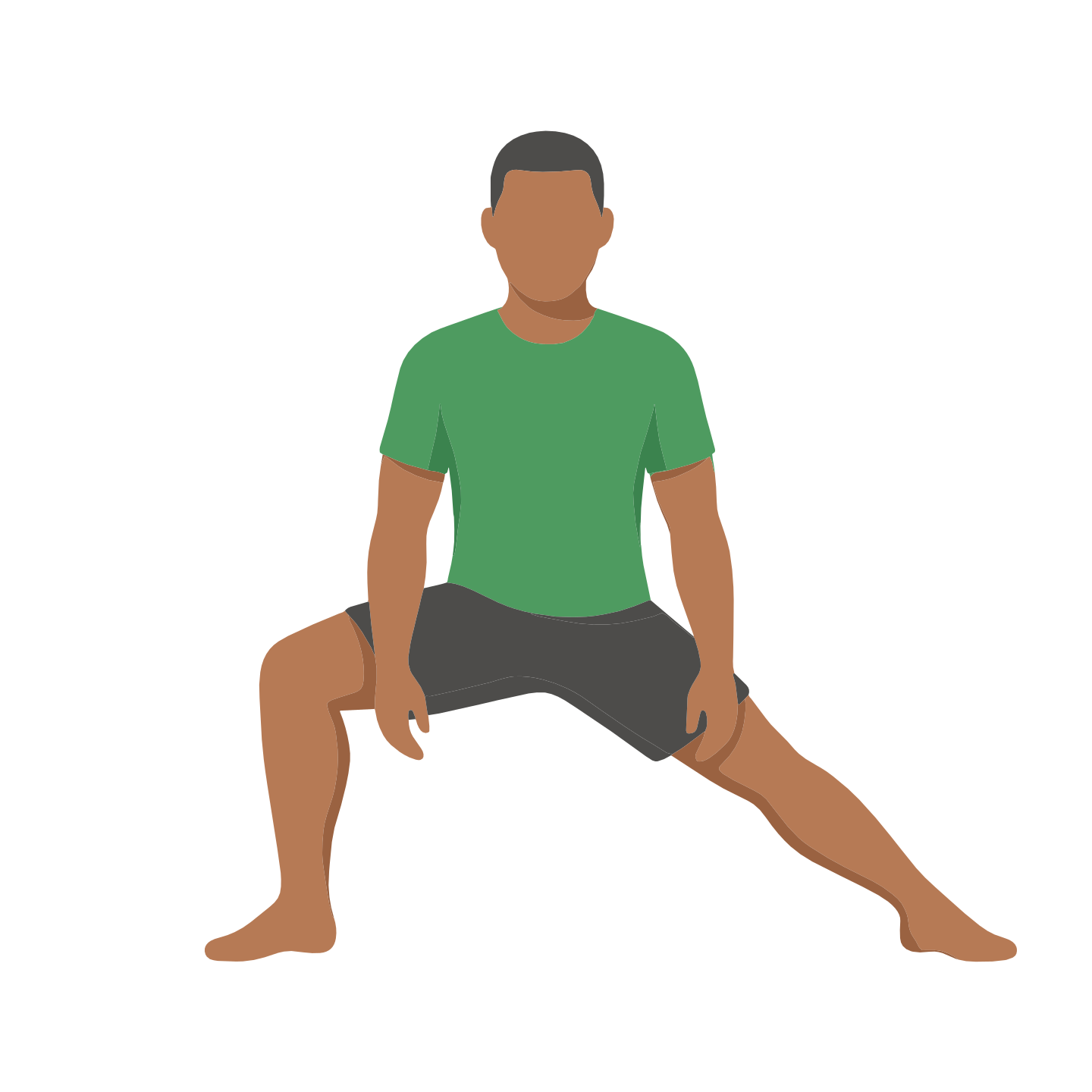
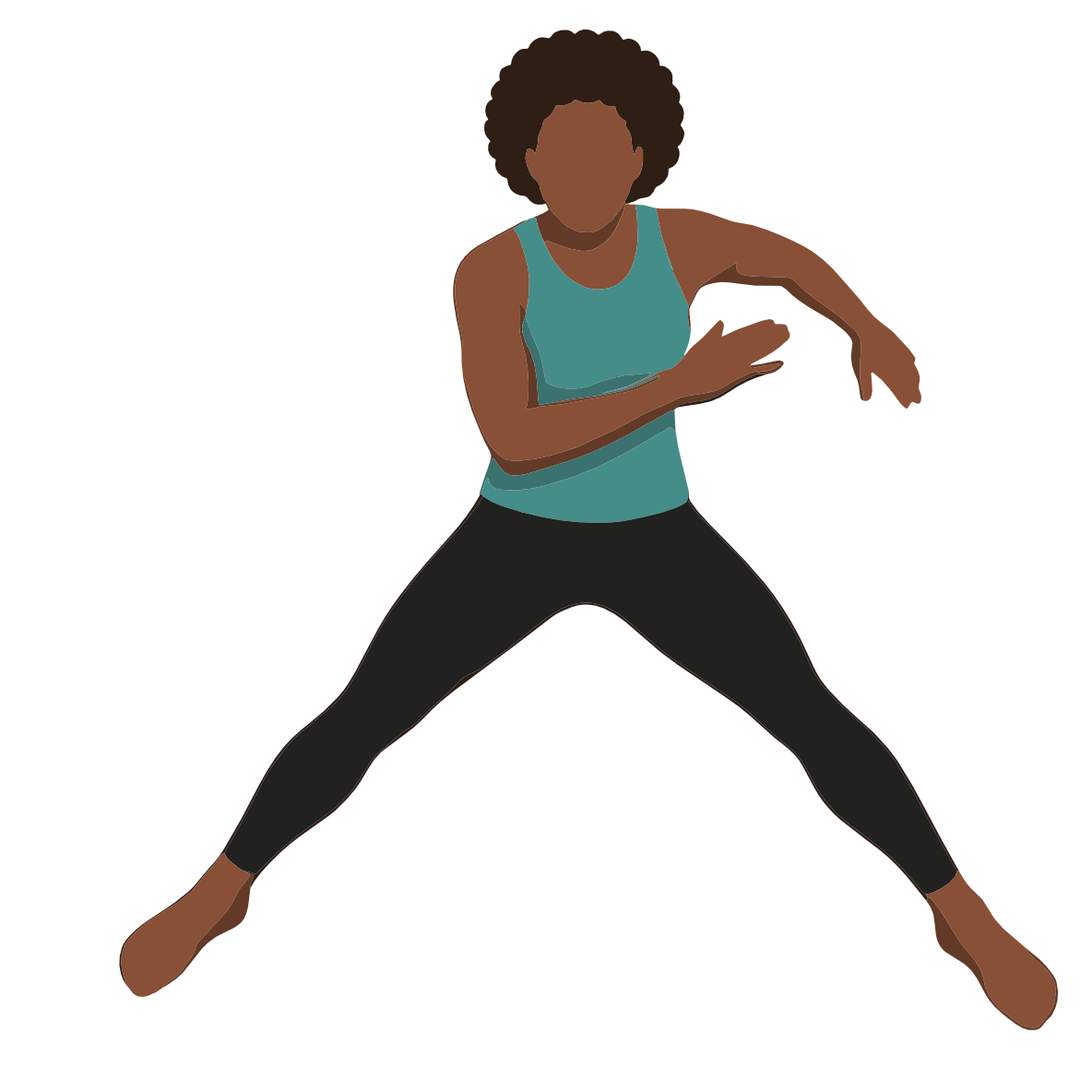
Sumo Lunges
Adductors, Glute Medius, and Quads · 10 reps per side
  1. Stand in a very wide stance with toes turned slightly outward
  2. Shift your weight over one leg, bending that knee deeply
  3. Keep the opposite leg straight
  4. Drive the bent knee in line with the toes, don't let it cave inward
  5. Rock side to side in a controlled rhythm
Why it works
Loads the adductors through end-range hip abduction, the exact position of the uphill ski in a carved turn. Primes the lateral stabilizers before they're needed at speed.
7
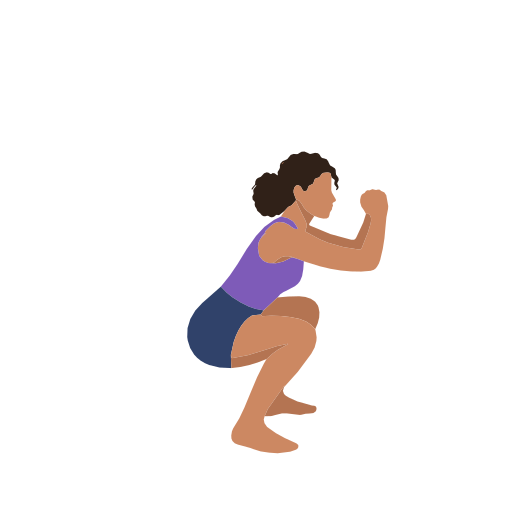
Bodyweight Squat
Quads, Glutes, and Ankles · 15 reps
  1. Stand with feet shoulder-width apart, toes pointed slightly out
  2. Send hips back and down as if sitting in a chair
  3. Keep chest proud and back straight
  4. Drive through the whole foot to stand back up
Why it works
The squat is the foundational athletic ski position. Repeated bodyweight squats also mobilize the ankles into dorsiflexion, the key range for maintaining appropriate shin-to-boot pressure.
8
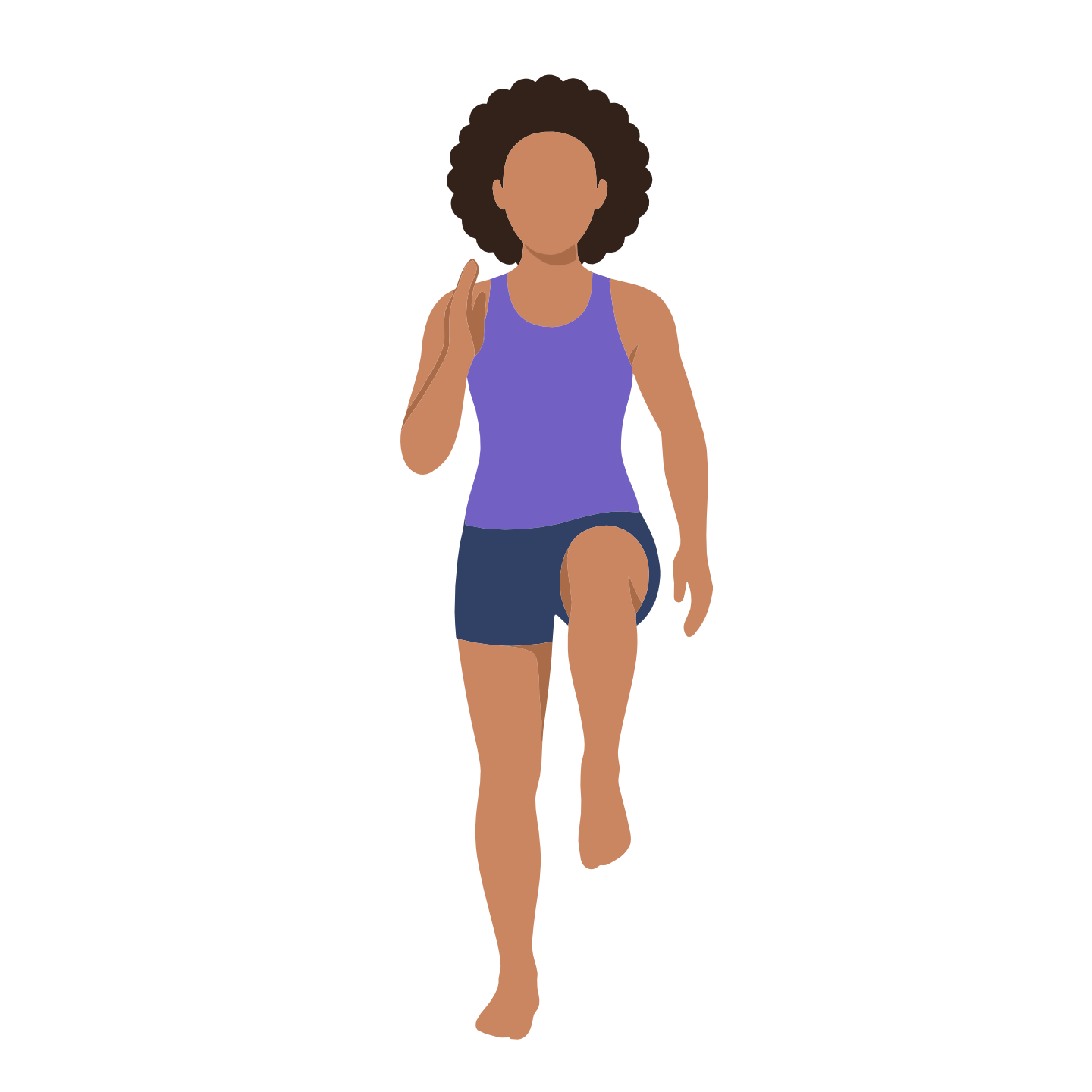
High Knee Steps
Hip Flexors, Quads, and Cardiovascular System · 30 seconds
  1. March or jog in place with an upright torso
  2. Drive each knee toward your chest as high as comfortable
  3. Pump opposite arms in sync with your legs
  4. Land softly on the balls of your feet
  5. Keep your core tight and avoid leaning back
Why it works
Rapidly raises core temperature before cold-weather exertion. Warm muscle tissue has faster nerve conduction velocity, meaning your reaction time to a sudden ski edge release is measurably better when warmed up.
9
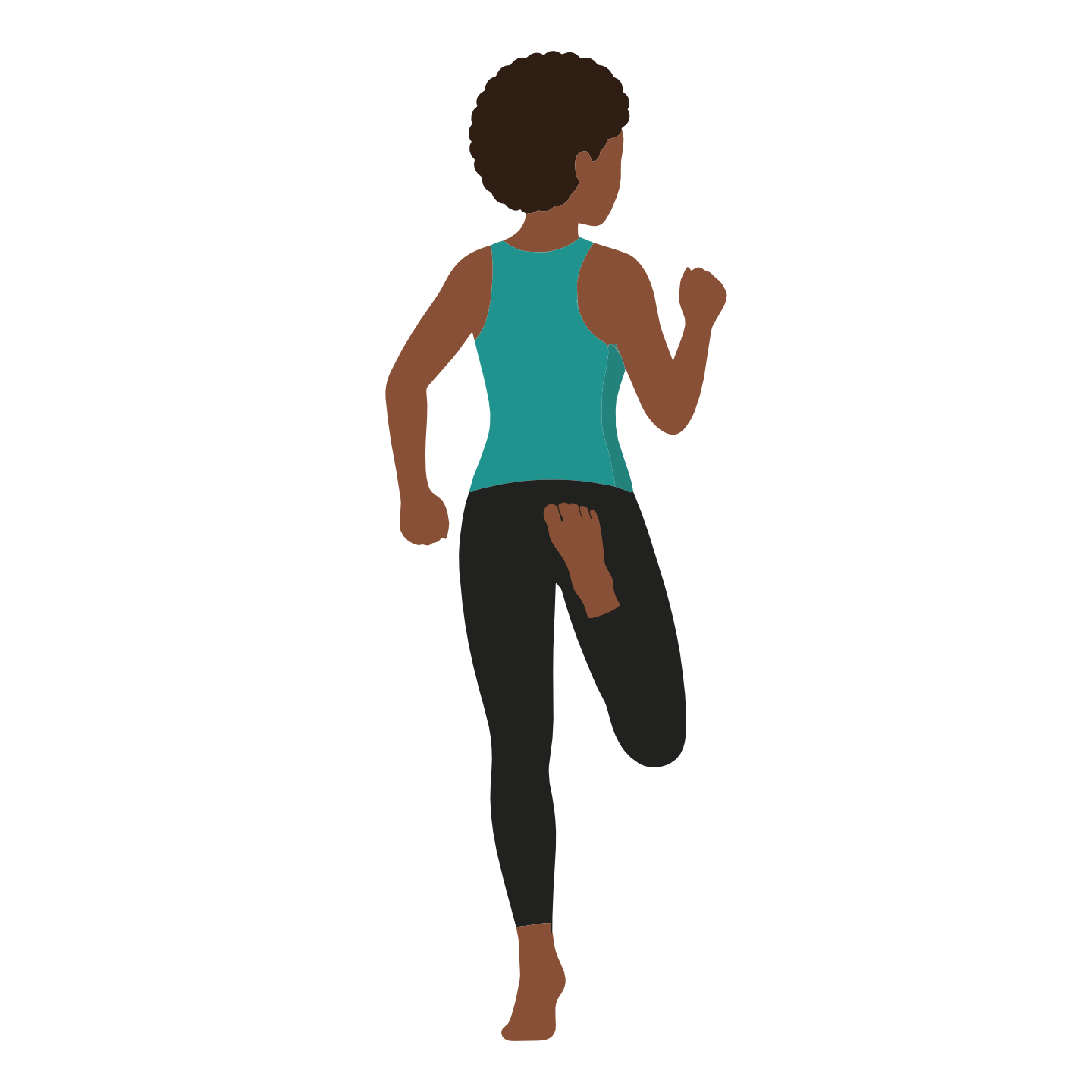
Butt Kicks
Hamstrings and Rectus Femoris · 30 seconds
  1. Jog or march in place, kicking your heels up toward your glutes
  2. Keep your knees pointing downward throughout the movement
  3. Swing your arms naturally as you would while running
  4. Focus on pulling the heel up rather than kicking back
  5. Land lightly on the balls of your feet
Why it works
Fires the hamstrings dynamically. The hamstrings act as ACL synergists, resisting anterior tibial translation during the catch phase of ski falls, a key ACL-protective mechanism.
10
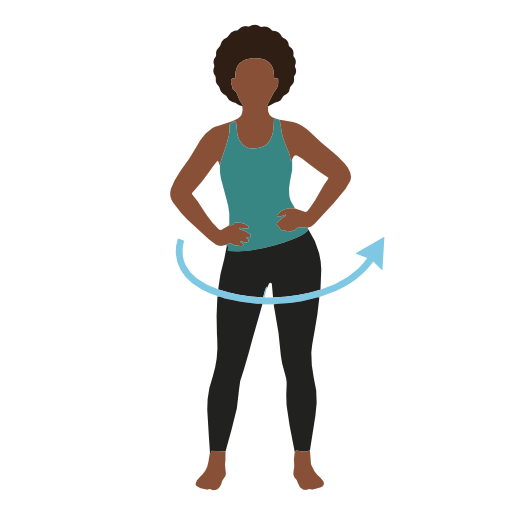
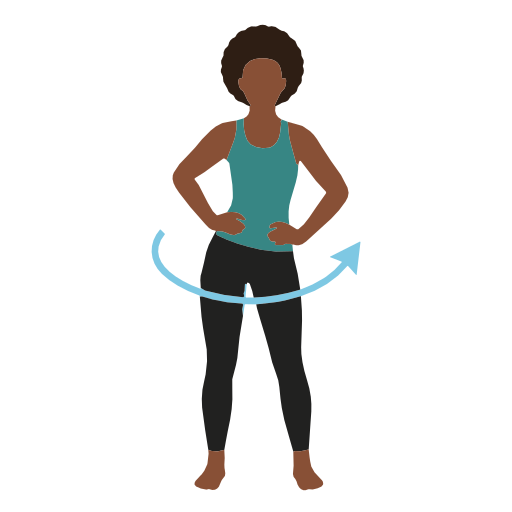
Hip Circles
Hip Rotators, Glute Medius, and Hip Flexors · 10 circles each direction per side
  1. Stand with feet hip-width apart and hands on hips
  2. Rotate the pelvis in large, slow circles
  3. Keep knees slightly bent and weight evenly distributed
  4. Maximize circle size in both directions
  5. Keep your upper body relatively still
Why it works
Every ski turn combines internal and external hip rotation. Glute med activation through hip circles reduces dynamic knee valgus, one of the key mechanical patterns linked to ACL injury in alpine skiing.
11
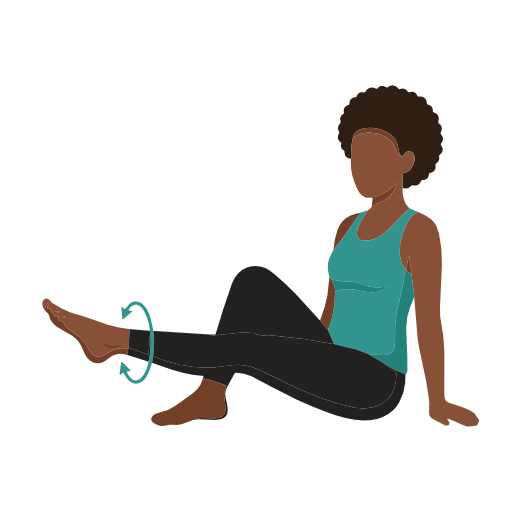
Ankle Rotations
Ankle Joint Capsule and Stabilizers · 15 circles each direction per ankle
  1. Lift one foot off the ground, holding a wall for balance if needed
  2. Rotate the ankle in large, slow circles
  3. Complete circles in both directions before switching feet
  4. Keep the movement slow and controlled
  5. Point and flex the foot at the end range of each rotation
Why it works
Dorsiflexion drives the shin into the boot tongue. Restricted ankle mobility forces the backseat posture that shifts load onto the quad and ACL. Ankle rotations prime the joint before it's locked into a stiff ski boot.
12
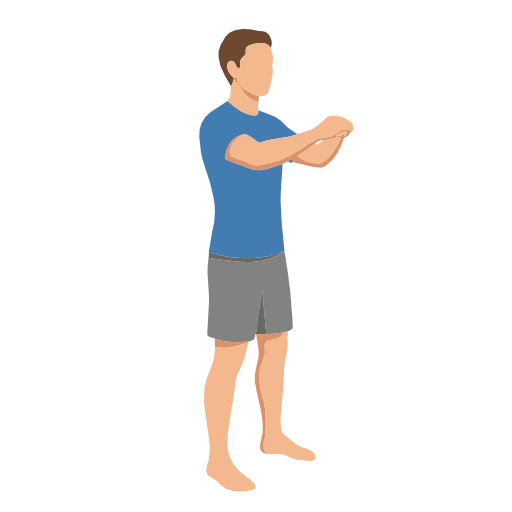
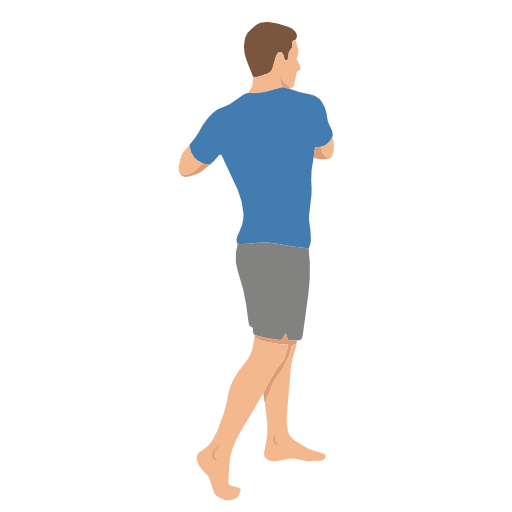
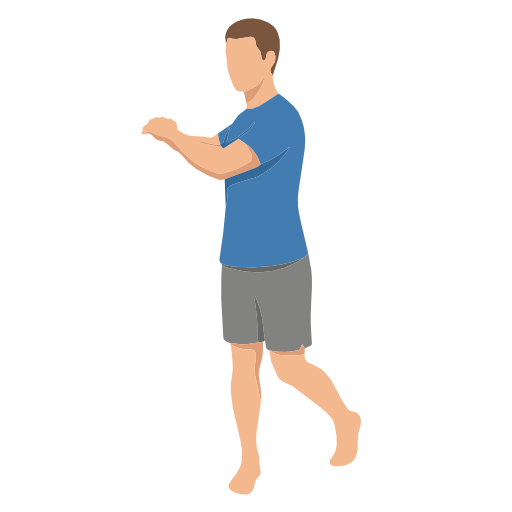
Trunk Rotations
Obliques, Thoracic Spine, and Erectors · 20 reps
  1. Stand with feet slightly wider than hip-width apart
  2. Hold arms at chest height or out to the sides
  3. Rotate your torso from left to right in a controlled swing
  4. Keep your hips and feet stable, rotate from the thoracic spine
  5. Breathe naturally and gradually increase range of motion
Why it works
Alpine skiing demands counter-rotation: the upper body faces downhill while the lower body turns across the fall line. Trunk rotations warm the rotational kinetic chain that powers this movement.
13
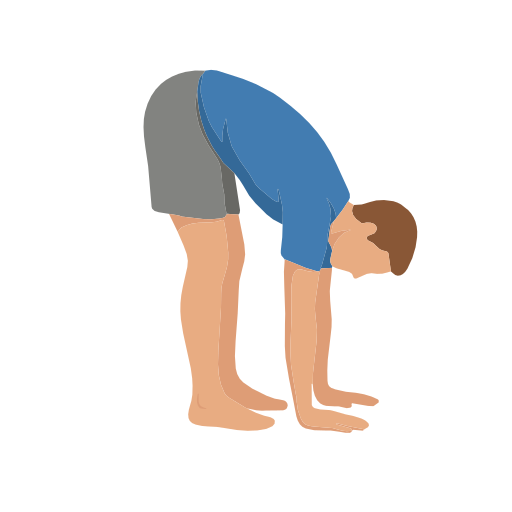
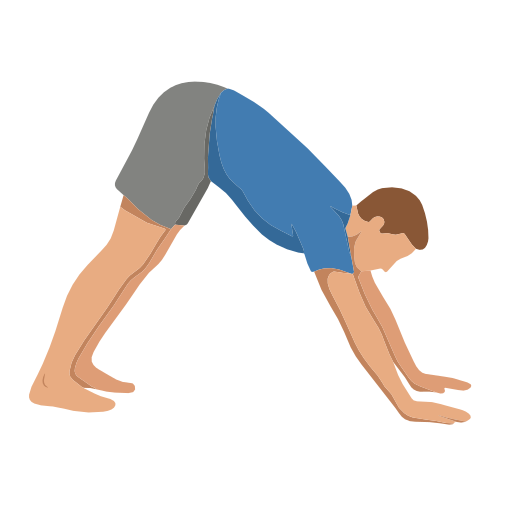
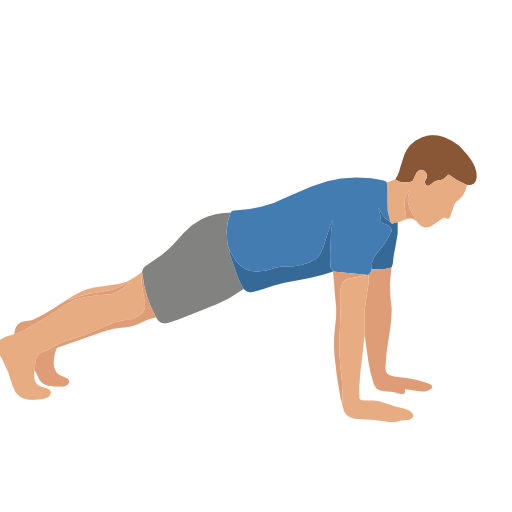
Inchworms
Hamstrings, Calves, Core, and Shoulders · 6 reps
  1. Hinge at the hips and place hands on the floor in front of your feet
  2. Walk hands out to a high plank position
  3. Keep legs straight and take tiny steps, walking your feet toward your hands
  4. Stand up and repeat
Why it works
Full posterior-chain dynamic stretch combined with core and ankle dorsiflexion mobilization in one fluid movement. An efficient pre-ski warm-up that hits every structure you'll load on the mountain.
14
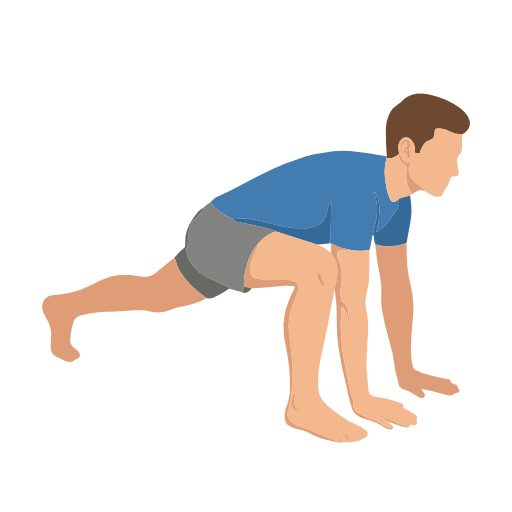
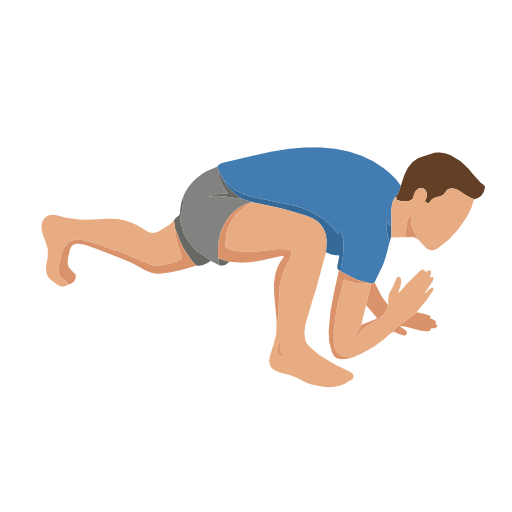
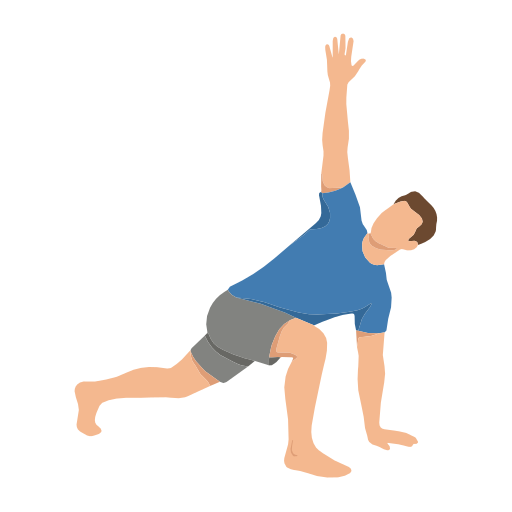
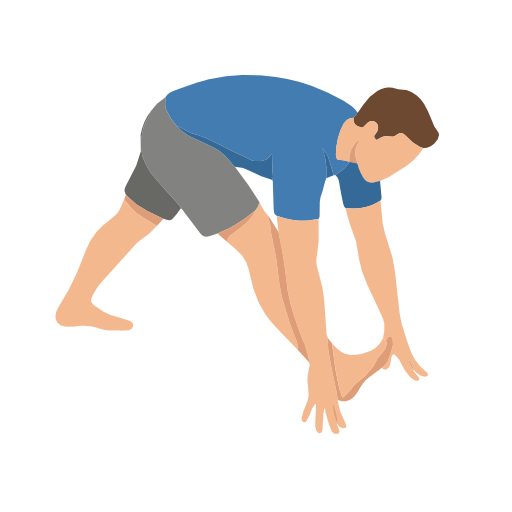
World's Greatest Stretch
Hip Flexors, Adductors, Hamstrings, and Thoracic Spine · 5 reps per side
  1. Lunge forward and place both hands inside the front foot
  2. Drop the elbow closest to the front foot toward the floor
  3. Rotate the same arm open toward the ceiling, looking at the hand
  4. Return the hand to the floor, rock back to straighten the front leg (hamstring stretch)
  5. Stand up and alternate legs
Why it works
Hits every ski-relevant mobility zone, ankles for boot cuff pressure, hips for turn initiation, T-spine for counter-rotation, in a single movement sequence. The single most efficient warm-up for skiing.
15
Lateral Bounds
Glute Medius, Quads, and Adductors · 8 reps per side
  1. Jump sideways from one foot to the other in a bounding motion
  2. Land on a single foot with a slightly bent knee and hip
  3. Absorb the landing quietly, no stomping
  4. Swing the free leg behind the landing leg for balance
  5. Keep your core tight and chest up throughout
Why it works
Skiing is a lateral, single-leg sport. Lateral bounds prime the neuromuscular system with turn-mimicking landing mechanics. The FIS 2024 Consensus specifically recommends lateral bounding as a ski injury prevention movement.

The Static Stretching Mistake That Skiers Keep Making

Every ski season, people do a few quad stretches at the base of the mountain and call it a warm-up. The research says this may actually hurt performance. Behm and Chaouachi's comprehensive 2011 review found that static stretching before activity reduces muscle force output, in some cases by more than 8%, and the effect persists for up to an hour.

For skiing, where you're asking your quads to absorb and control forces multiple times their bodyweight on every turn, that's not a small number. The FIS 2024 Consensus Statement on ski injury prevention explicitly recommends replacing pre-ski static stretching with dynamic warm-up protocols.

Save your static holds for the end of the day.

The ACL Problem in Cold Weather

ACL tears are the most feared alpine skiing injury, and cold conditions increase risk. Cold muscle tissue is less pliable, less responsive, and has slower reaction times. The nerve conduction velocity, how fast your muscle fires when your brain sends a signal, is measurably lower in cold tissue.

This is why the cardiovascular components of the warm-up (high knee steps, butt kicks) aren't optional. They're not fitness work; they're cold-weather injury prevention.

Research on alpine ski injury patterns shows that most ACL tears occur in the first two runs of the day or after a long cold chairlift ride, both situations where inadequate warm-up is a contributing factor.

Protecting the Downhill Knee

The leading knee in alpine skiing absorbs the highest loads. It's the one driving the turn. Dynamic warm-up movements that target single-leg stability (lateral bounds) and rotational readiness (trunk rotations, world's greatest stretch) prep this knee for what it's about to experience. Think of the warm-up as quality control before you put the knee under real load.

Frequently asked questions

Why is static stretching bad before skiing?
Prolonged static stretching (holds over 60 seconds) before exercise acutely reduces muscle force production in the stretched muscle by 5-8%, and this effect lasts up to an hour. For skiing, where your quads need to generate maximum eccentric force through every turn, this is a meaningful disadvantage. Static stretches belong after skiing, not before.
How long should the pre-ski warm-up take?
10 to 15 minutes is sufficient for most conditions. On very cold days or after long chairlift rides, add 5 minutes and focus on the high knee steps and bodyweight squats to re-raise your core temperature before the next run.
What should I do between runs to stay warm?
Keep moving on the chairlift: pump your ankles, roll your wrists, and shift your weight. Before each run, do a quick 10-rep bodyweight squat sequence at the top. Cold muscles react slowly, and the ACL is particularly vulnerable in the first few turns after a cold chairlift ride.
Should I warm up differently for moguls vs. groomed runs?
Add lateral bounds and trunk rotations for mogul skiing, which demands faster rotational and lateral movements. For groomed runs, the full routine above is sufficient. Either way, the warm-up should include some cardiovascular work to raise your core temperature.
Reach is launching soon
Audio cues, hold timers, and sport-specific routines built for athletes who want to stay healthy. Join the waitlist to be first to know when we launch.
Behm and Chaouachi 2011. Effects of Pre-Exercise Stretching, Eur J Appl Physiol
FIS Consensus Statement on Ski Injury Prevention 2024
Arthritis Foundation. Dynamic Warm-Up Guide
Athlecare Skiing Injury Prevention Protocol

More Skiing guides

Cool-Down
Skiing Cool-Down Stretches: 15 Stretches for Post-Ski Recovery
Mobility
Skiing Mobility Stretches: 15 Rest-Day Exercises for a Stronger Season