← Back to library
Basketball·Warm-Up
·6 min read

Basketball Warm-Up Stretches: 10 Dynamic Moves Before You Play

Basketball players should prioritize a dynamic warm-up that targets ankle stability and 'triple extension' mechanics to significantly reduce the risk of non-contact knee and ankle injuries.

A proper dynamic warm-up is the single best injury-prevention tool in basketball. These 10 movements prepare your hamstrings, hip flexors, calves, and ankles for the sprint-jump-land demands of the game, ensuring you're ready for the first whistle.

The Recommended Routine

1
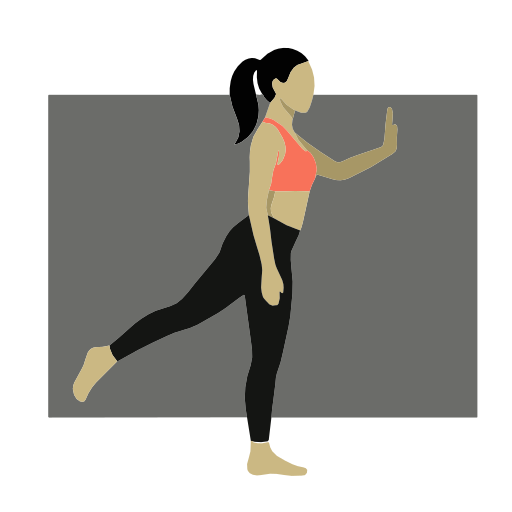
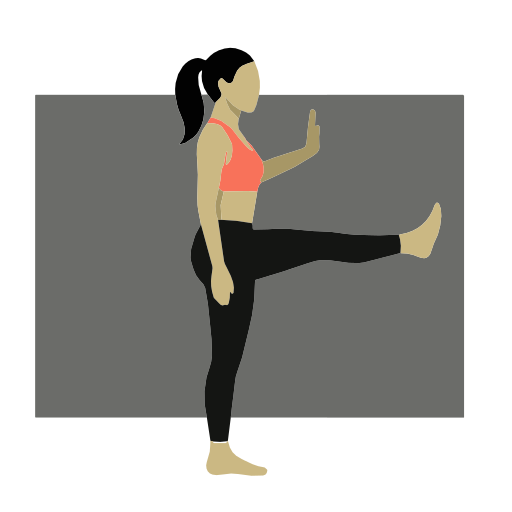
Forward/Backward Leg Swings
Hips and Hamstrings · 12 reps per leg
  1. Stand sideways to a wall or fence and hold on for balance
  2. Keep your torso upright and core engaged
  3. Swing the outside leg forward and backward in a smooth pendulum motion
  4. Gradually increase the height of the swing
Why it works
Prepares your hamstrings and hip flexors for the explosive sprint and jump cycles of the game.
2
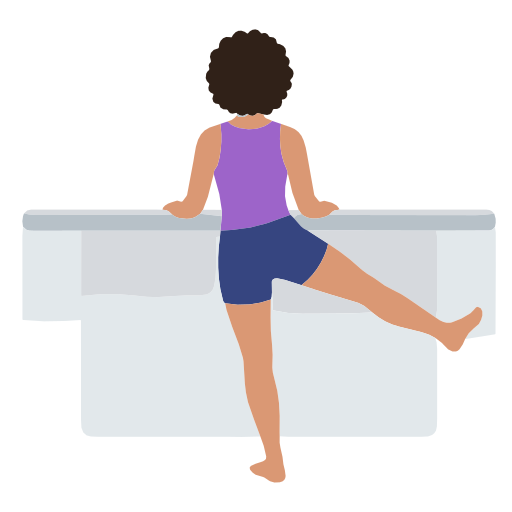
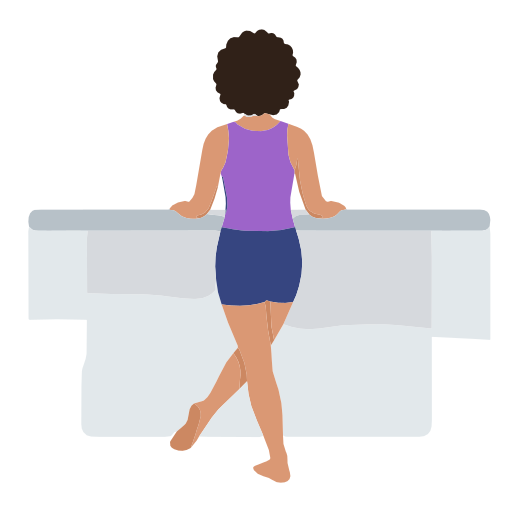
Lateral Leg Swings
Inner and Outer Hip · 12 reps per leg
  1. Face a wall or fence and hold on for balance
  2. Swing one leg side to side across the front of your body
  3. Keep the torso relatively still
  4. Start with small swings and gradually increase height
Why it works
Defensive slides and lateral cuts put massive load on the adductors; this primes them for the stress.
Source: JOSPT 2023
3
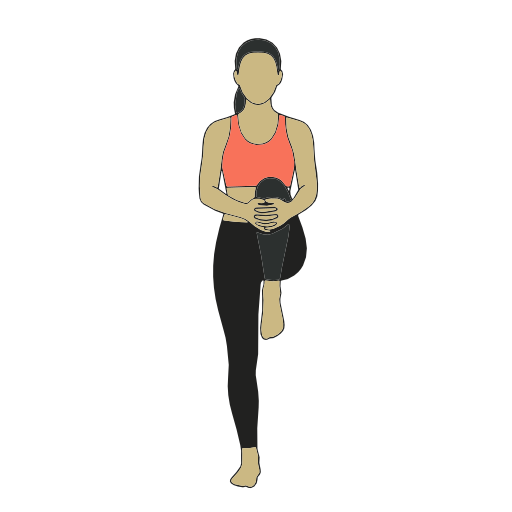
Knee Hugs
Glutes and Balance · 10 reps per leg
  1. Walk forward, pulling one knee into your chest with each step
  2. Stand tall and squeeze the glute of the standing leg
  3. Hold the knee briefly at the chest before stepping forward
  4. Keep your torso upright, don't round your back
  5. Maintain balance on a single leg with each rep
Why it works
Trains the single-leg balance and calf activation needed for stable landings and ACL protection.
4
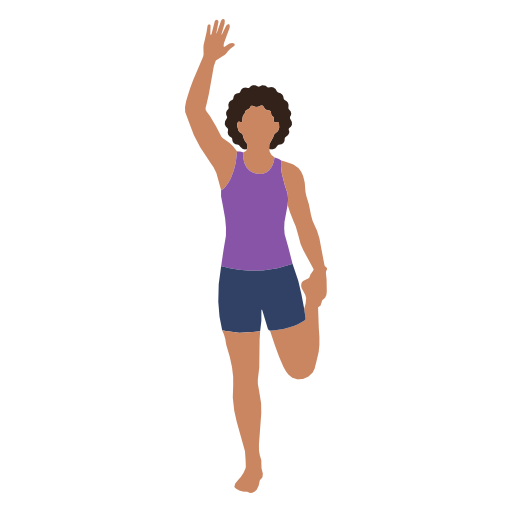
Walking Quad Pulls
Quads and Hip Flexors · 10 reps per leg
  1. Walk forward, reaching back to grab one foot with the same-side hand
  2. Pull the heel toward the glute
  3. Reach the opposite arm overhead to stretch the entire anterior chain
  4. Hold briefly, step down, and alternate
Why it works
Reduces patellar tendon overload (Jumper's Knee) by lengthening the muscles that pull on the knee cap.
5
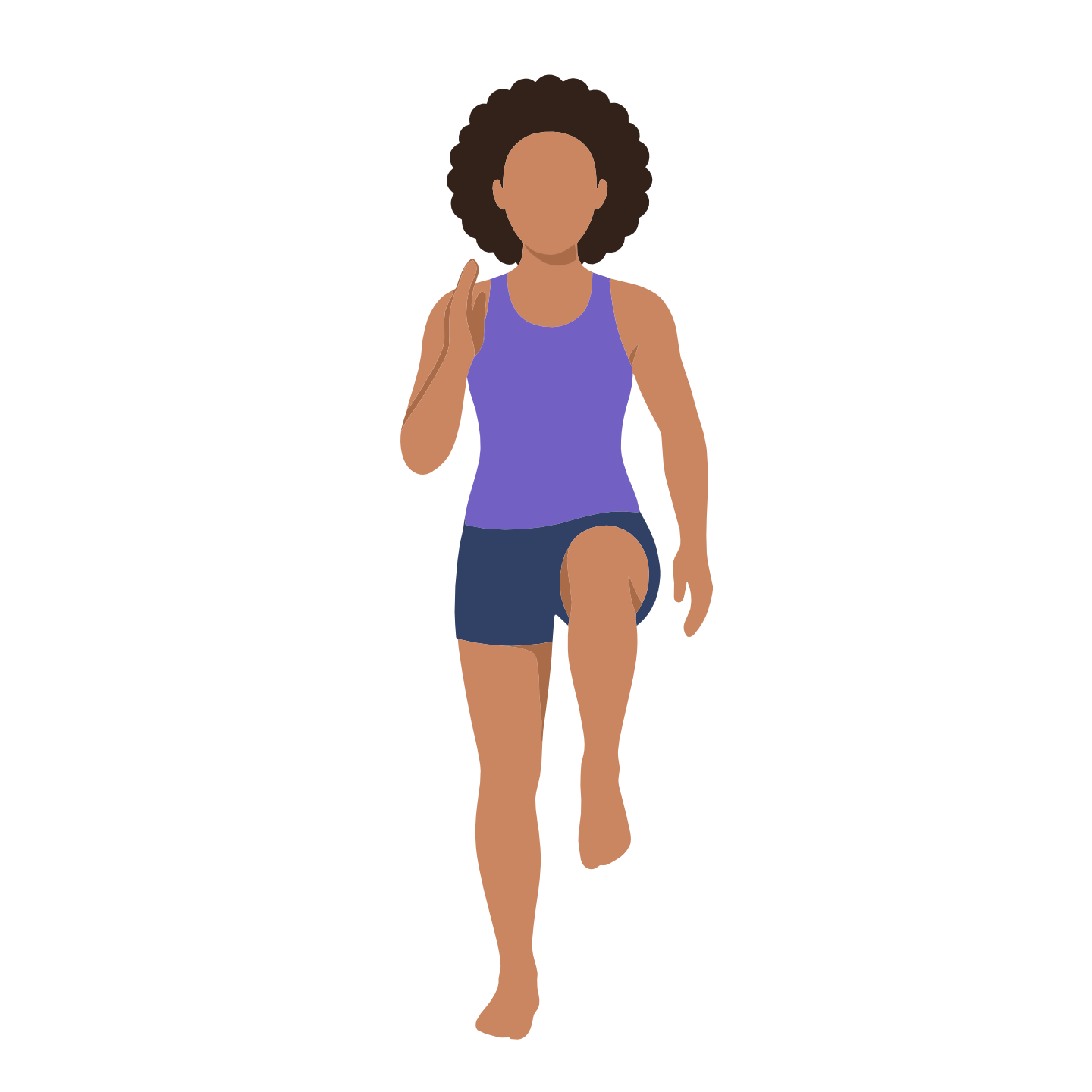
High Knee Steps
Full Body · 30 seconds
  1. March or jog in place with an upright torso
  2. Drive each knee toward your chest as high as comfortable
  3. Pump opposite arms in sync with your legs
  4. Land softly on the balls of your feet
  5. Keep your core tight and avoid leaning back
Why it works
Rehearses the rapid 'triple extension' pattern used for fast breaks, layups, and rebounding.
Source: JOSPT 2022
6
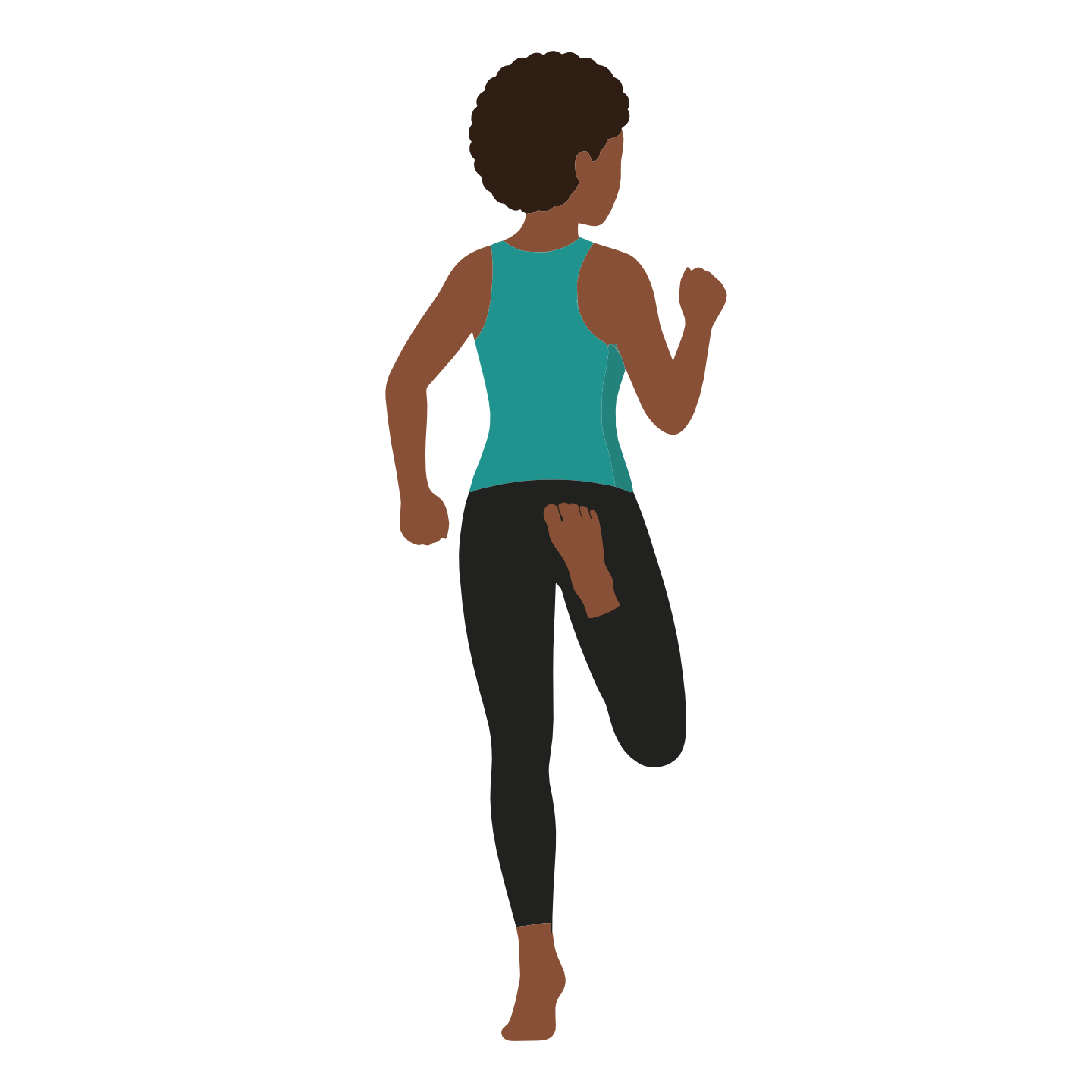
Butt Kicks
Hamstrings and Quads · 30 seconds
  1. Jog or march in place, kicking your heels up toward your glutes
  2. Keep your knees pointing downward throughout the movement
  3. Swing your arms naturally as you would while running
  4. Focus on pulling the heel up rather than kicking back
  5. Land lightly on the balls of your feet
Why it works
Activates the hamstrings through rapid flexion, reducing the risk of a strain during transition play.
7
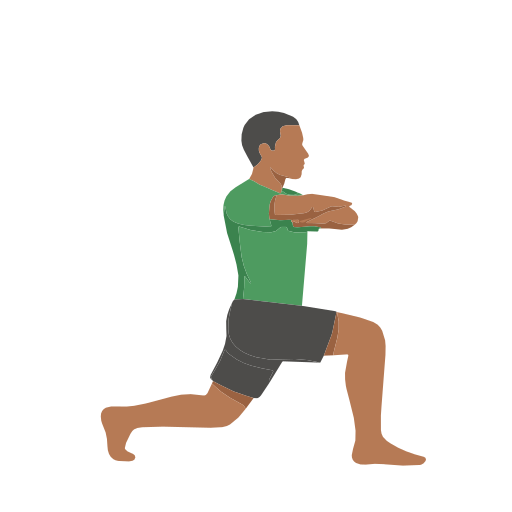
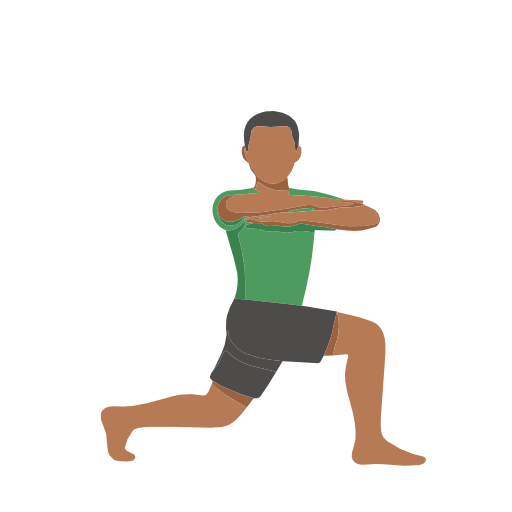
Lunge with Twist
Hips and Mid-Back · 10 reps per leg
  1. Step forward into a deep lunge, keeping front knee over ankle
  2. Rotate your torso toward the front knee only, keep hips square
  3. Maintain an upright chest throughout
  4. Drive the rear knee toward the ground without touching
  5. Return to standing and alternate sides
Why it works
Opens the hip flexors and mobilizes the mid-back, which is essential for shooting and passing accuracy.
8
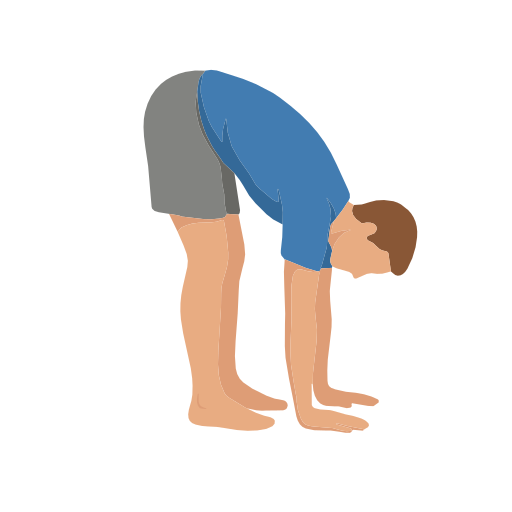
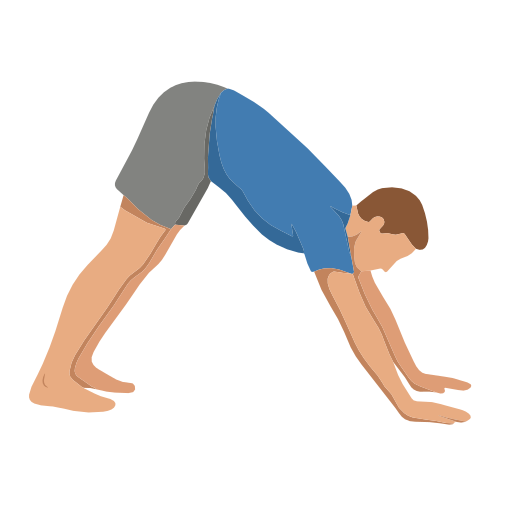
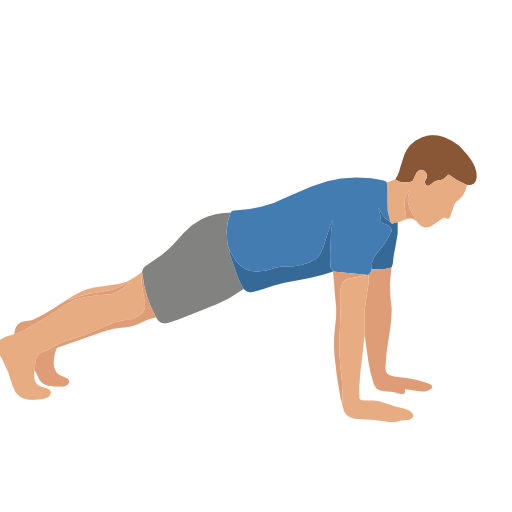
Inchworms
Posterior Chain · 8 reps
  1. Hinge at the hips and place hands on the floor in front of your feet
  2. Walk hands out to a high plank position
  3. Keep legs straight and take tiny steps, walking your feet toward your hands
  4. Stand up and repeat
Why it works
Addresses posterior chain flexibility while activating the core and shoulders for physical contact.
9
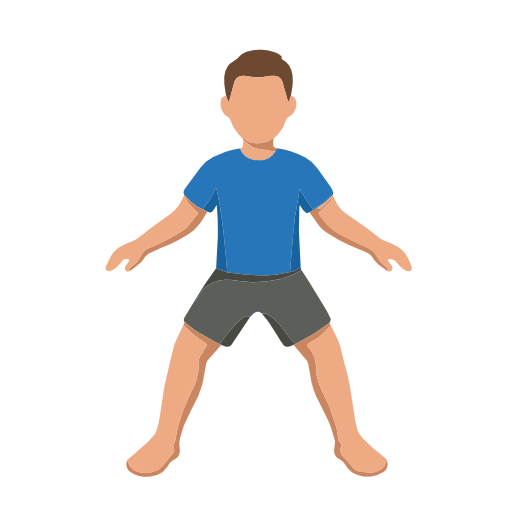
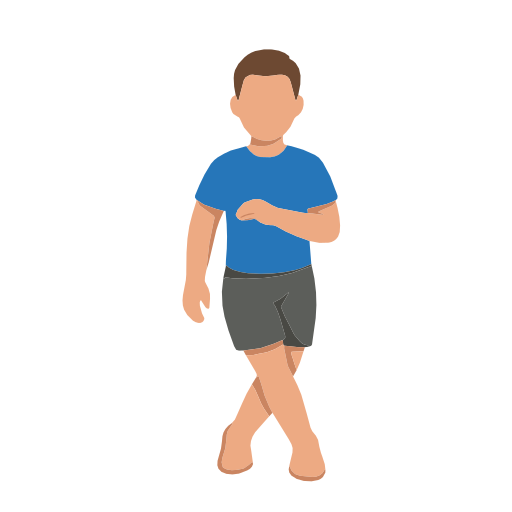
Carioca
Hip Rotators and Ankles · 15 yards each way
  1. Move laterally by crossing the trailing leg in front of, then behind, the lead leg
  2. Keep shoulders square to the front
  3. Maintain a low athletic stance with a slight bend in the knees
  4. Move quickly and rhythmically on the balls of your feet
Why it works
Rehearses defensive footwork and prepares the ankle stabilizers that protect against lateral sprains.
Source: JOSPT 2022
10
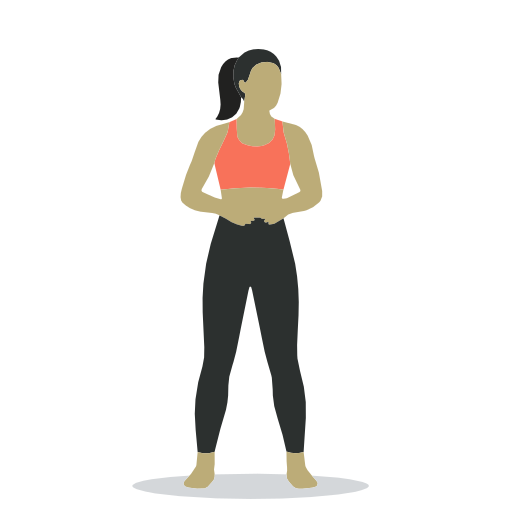
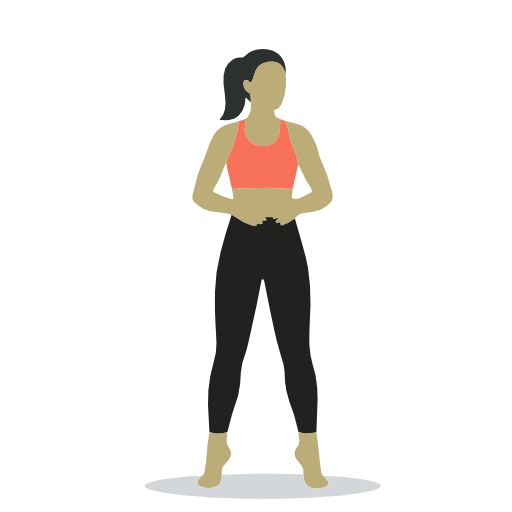
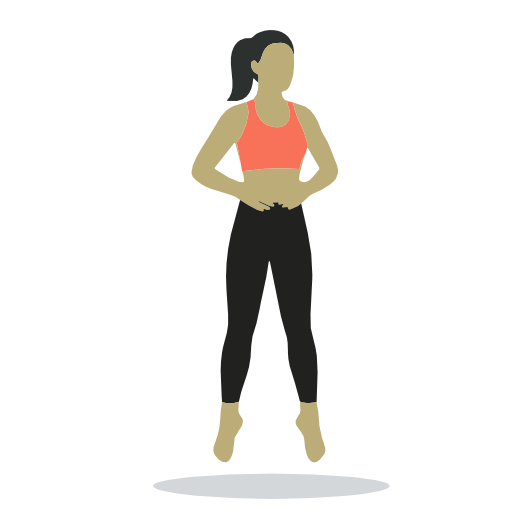
Ankle Pogo Hops
Ankles and Achilles · 2 sets of 20 hops
  1. Keep legs mostly straight with only a micro-bend in the knees
  2. Bounce off the balls of your feet
  3. Focus on quick ground reaction times (minimal ground contact)
  4. Keep your torso upright and core braced
Why it works
Primes the 'spring' in your ankles for jumping and improves your reaction time to avoid rolls.

The 36% Rule for Injury Prevention

Clinical studies on structured basketball warm-up programs have shown a staggering result: a proper dynamic routine can reduce ankle and knee injuries by over one-third.[1] In a game defined by sudden stops, explosive jumps, and lateral shuffles, your warm-up isn't just about performance, it's about staying on the floor for the fourth quarter.

Dynamic preparation reduces non-contact injuries by over 36% in competitive basketball.

By moving through the ranges of motion you'll use during the game, you ensure your tissues are elastic and your nervous system is 'awake.'

Protecting the ACL

The most feared injury in basketball is an ACL tear, which often happens during an uncontrolled landing or a sudden pivot. Research shows that training your 'landing mechanics' during a warm-up can significantly lower this risk.[2]

The Walking Knee Hugs and Ankle Pogo Hops in this routine are designed to teach your body how to absorb force through your muscles rather than your ligaments. This 'pre-activation' is your best defense against catastrophic knee injury.

Managing Jumper's Knee

Patellar tendinopathy, or 'Jumper's Knee,' is a chronic issue for many basketball players caused by the repetitive stress of leaping and landing. If your quads are tight, they pull constantly on your patellar tendon, increasing inflammation.[3]

By performing the Walking Quad Pulls and Walking Lunges, you restore the length of the anterior chain. This offloads the pressure on your knee cap, allowing you to maintain your vertical leap throughout the season without the nagging pain in your tendons.

Frequently asked questions

Is it okay to do this on the court?
Yes, this routine requires no equipment and can be done during your team's warm-up time before the game starts.
How long should I spend on this?
Ten minutes is the ideal time to raise your core temperature and feel 'game ready'.
What if I feel a pinch in my ankle?
Back off the range of the Pogo Hops and Lateral Swings. If pain persists, consult a trainer about your ankle stability.
Reach is launching soon
Audio cues, hold timers, and sport-specific routines built for athletes who want to stay healthy. Join the waitlist to be first to know when we launch.
1. Räisänen AM et al. JOSPT. 2022
2. Longo UG et al. American Journal of Sports Medicine. 2012
3. NBPA Training Ground. 2023

More Basketball guides

Cool-Down
Basketball Cool-Down Stretches: 10 Static Holds for Post-Game Recovery
Mobility
Basketball Mobility Stretches: Daily Maintenance for Long-Term Joint Health