← Back to library
Basketball·Mobility
·8 min read

Basketball Mobility Stretches: Daily Maintenance for Long-Term Joint Health

Daily mobility work for basketball should focus on restoring ankle dorsiflexion and hip internal rotation to preserve jumping power and protect the knees and lower back from compensatory stress.

Ankle restriction and hip mobility deficits are the two most important modifiable risk factors in basketball. These ten maintenance exercises are designed to build the tissue length and joint range that prevents injury over a grueling season, keeping you athletic and explosive for years to come.

The Recommended Routine

1
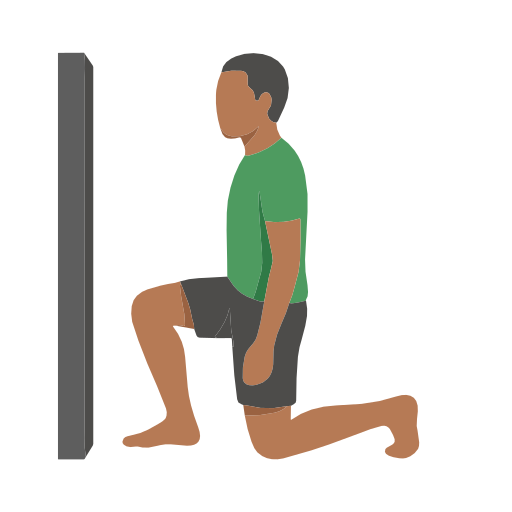
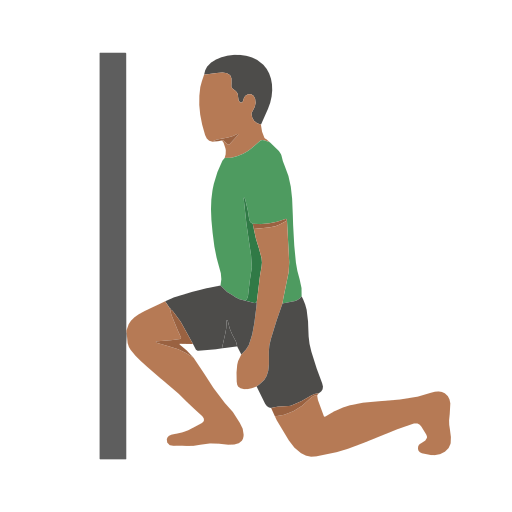
Knee-to-Wall Ankle Dorsiflexion
Ankle Joint Capsule · 15 reps per side
  1. Stand facing a wall with one foot a few inches away
  2. Keep your heel planted firmly on the floor
  3. Drive your knee forward over your toes to touch the wall
  4. Move the foot back slightly if it's too easy, keeping the heel down
Why it works
Ankle dorsiflexion is the most common mobility deficit in basketball and a major predictor of ACL and ankle injury.
Source: IJSPT 2016
2
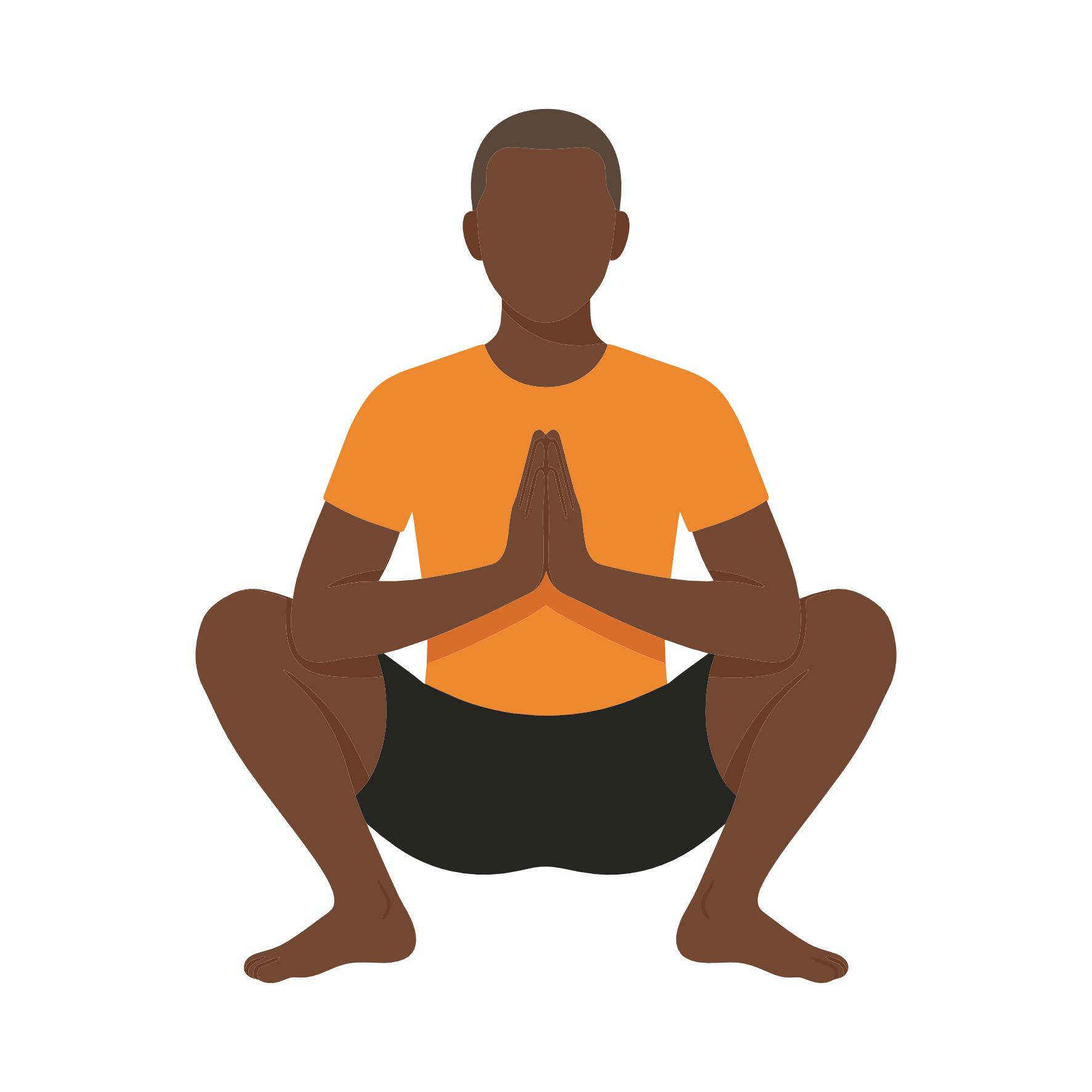
Garland Pose Squat
Ankles, Hips, and Spine · 90 seconds
  1. Stand with feet wider than hip-width and toes turned out 30–45 degrees
  2. Drop into a deep squat, keeping heels on the floor if possible
  3. Bring palms together and use elbows to press knees outward
  4. Keep chest tall and spine neutral
  5. Breathe deeply into the hips and hold
Why it works
Simultaneously addresses the entire chain needed for a low defensive stance and safe jumping mechanics.
3
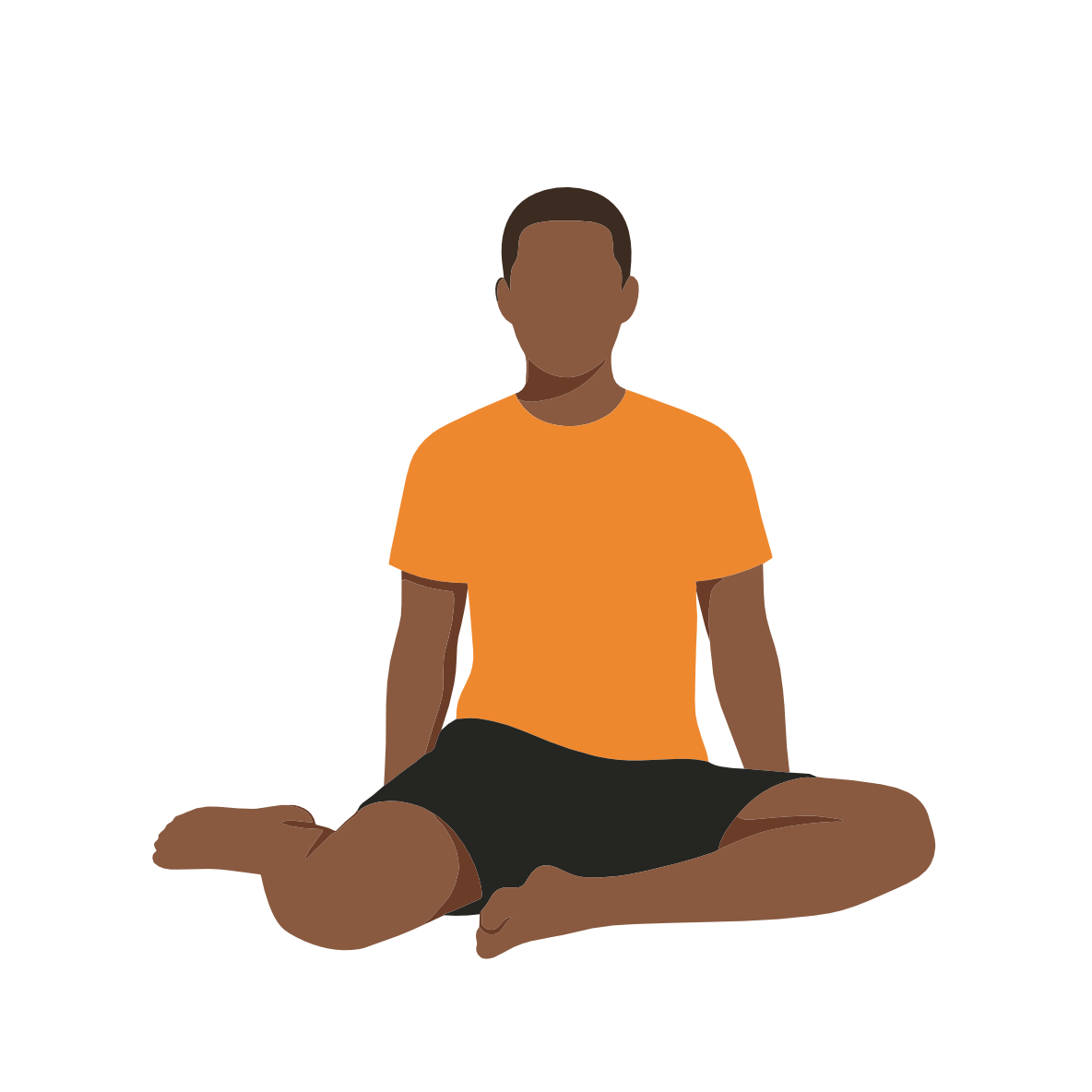
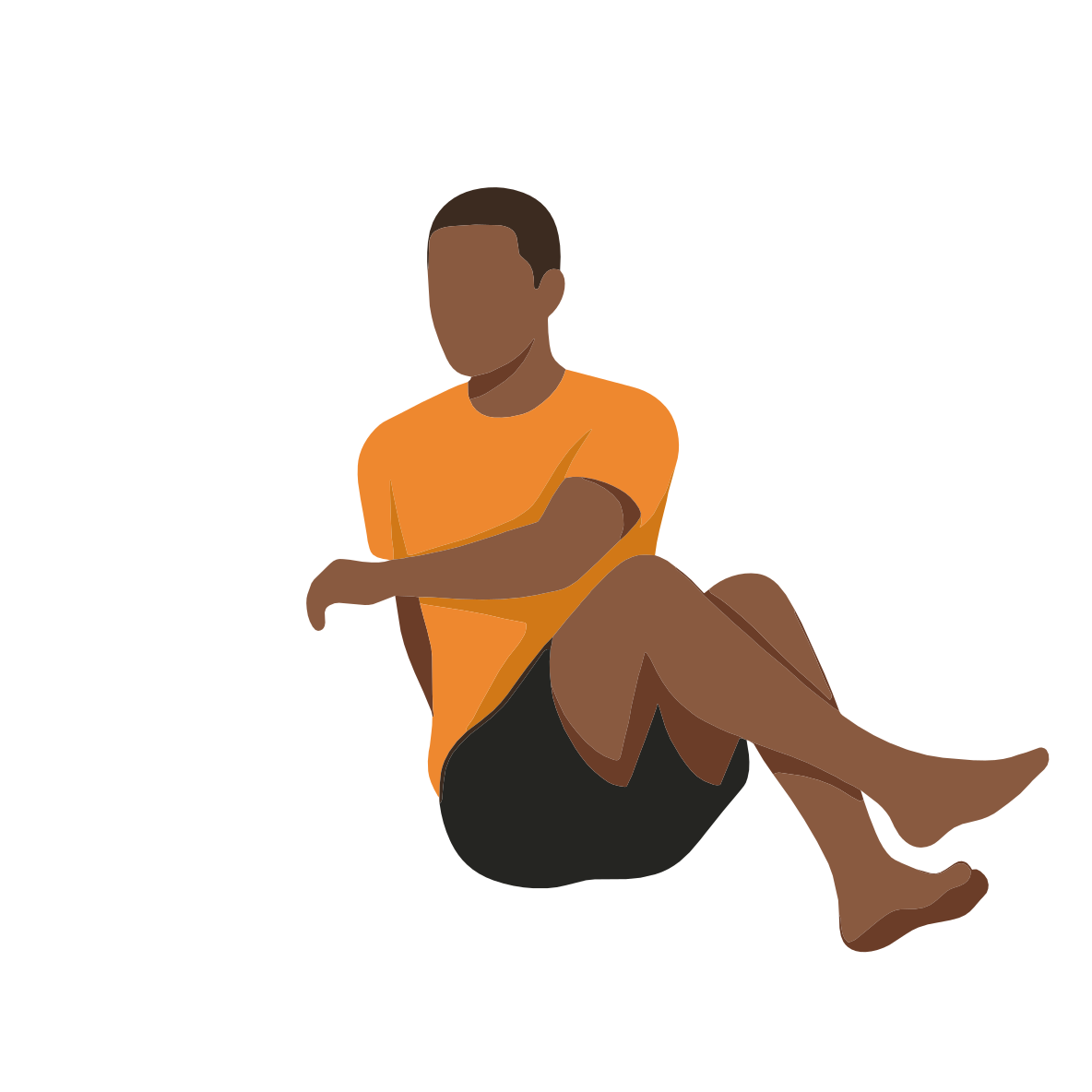
90/90 Hip Switches
Deep Hip Rotators · 60 seconds per side
  1. Sit with both legs bent at 90-degree angles, one in front, one to the side
  2. Keep both hands on the floor behind you for support
  3. Rotate both legs to switch sides smoothly, the rear leg swings forward
  4. Try to keep hips planted on the floor throughout
  5. Work to sit upright without leaning heavily on your hands
Why it works
Hip rotation is essential for crossovers and pivoting; deficits here drive lower back stress and groin strains.
4
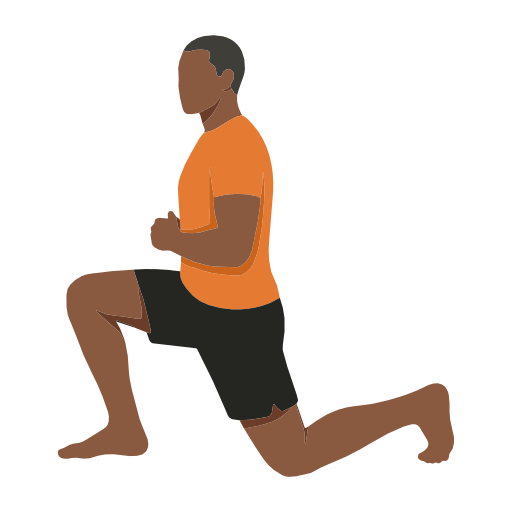
Half Kneeling Hip Flexor
Hip Flexors and Lats · 60 seconds per side
  1. Assume a half-kneeling position (one knee down, one foot forward)
  2. Tuck your pelvis slightly (posterior tilt) to engage the glute of the down leg
  3. Shift your weight slightly forward without arching your lower back
  4. Maintain a tall posture
Why it works
The overhead reach lengthens the lats, which can otherwise restrict your shot elevation and thoracic extension.
5
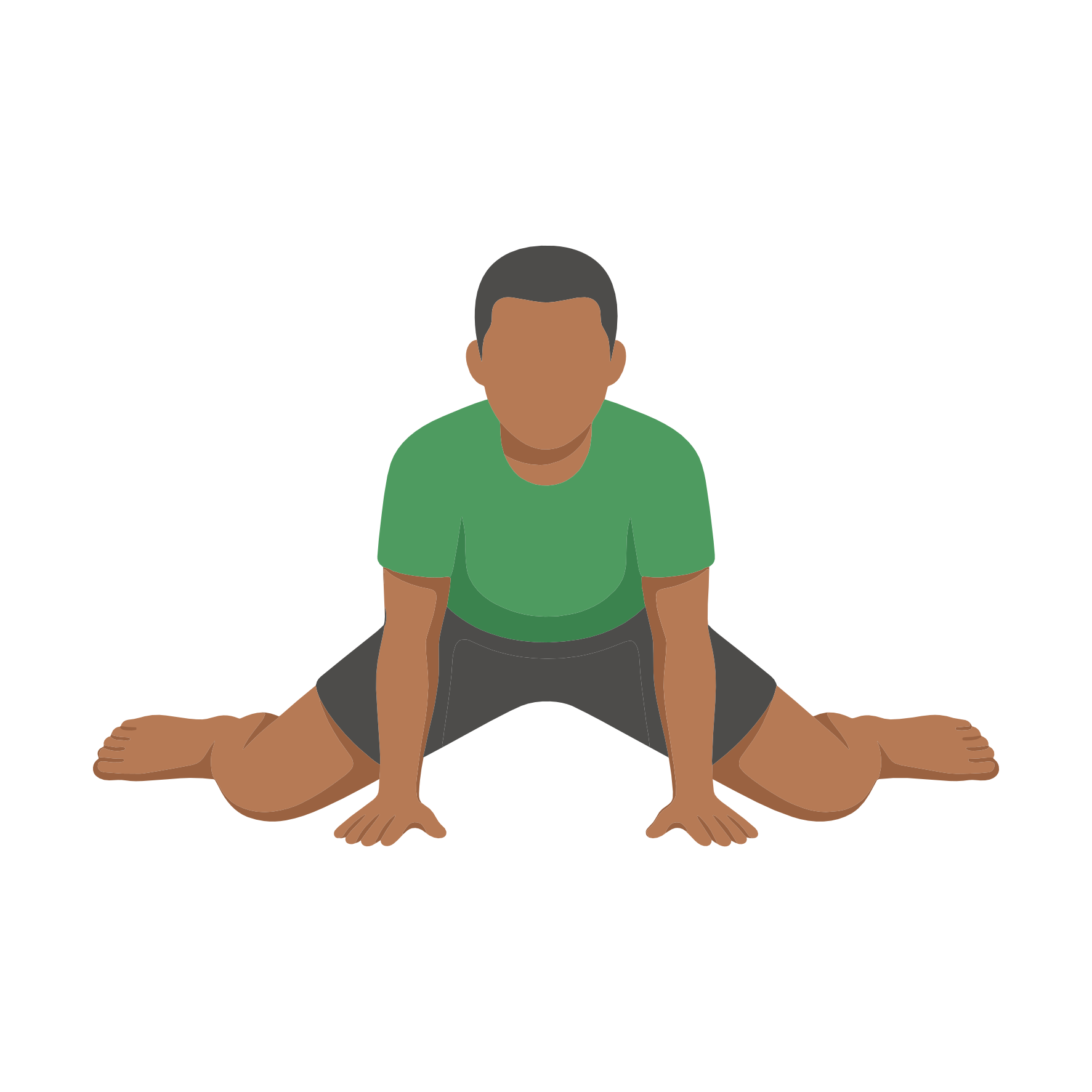
Frog Stretch
Inner Thigh and Groin · 60 seconds
  1. Kneel on a mat and walk the knees as wide as comfortable
  2. Turn feet outward in line with the knees
  3. Sink the hips back toward the heels while maintaining a flat back
  4. Prop on forearms or hands to support your upper body
  5. Hold and breathe, let gravity deepen the stretch over time
Why it works
Adductor flexibility programs significantly reduce groin injury rates in multi-directional athletes.
Source: JOSPT 2023
6
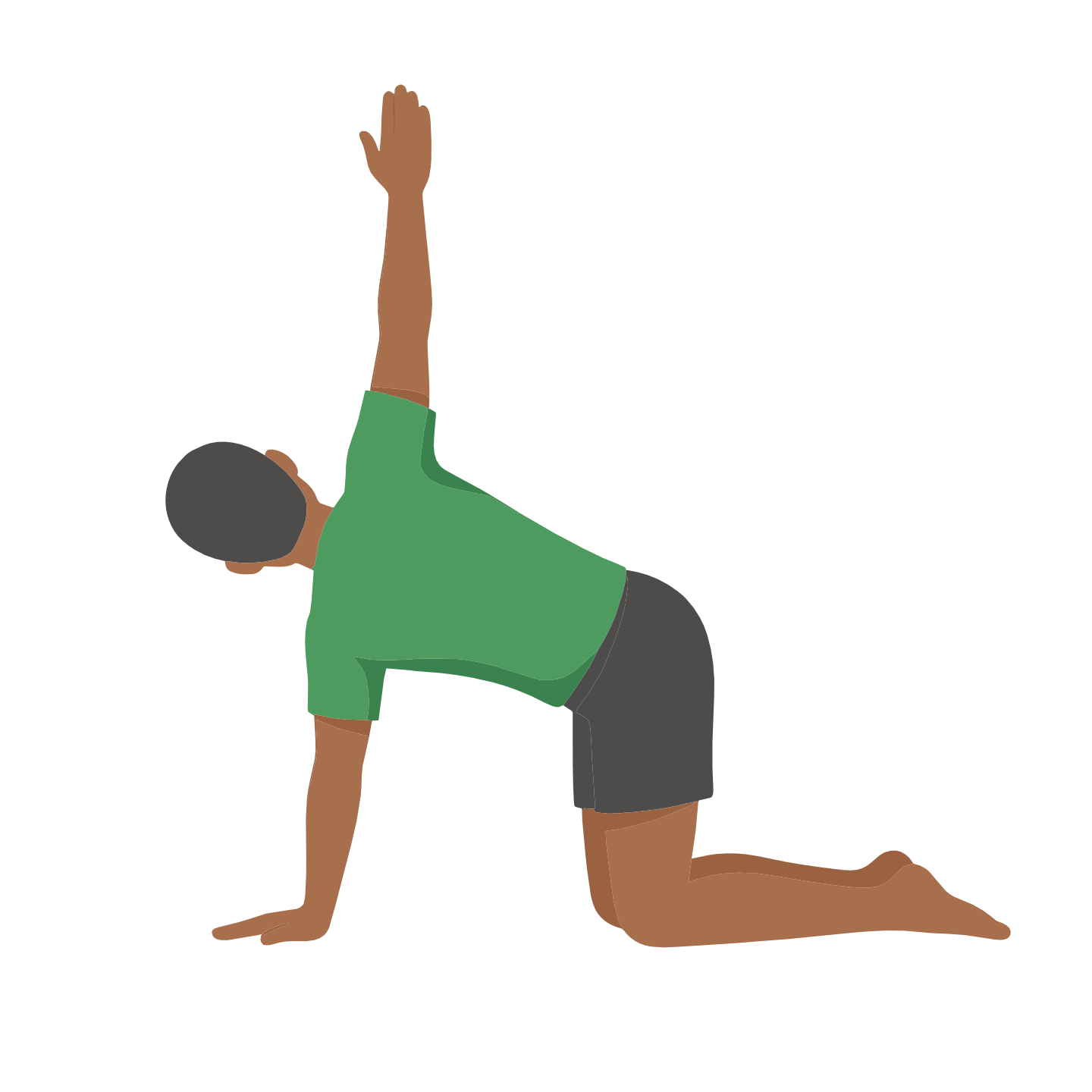
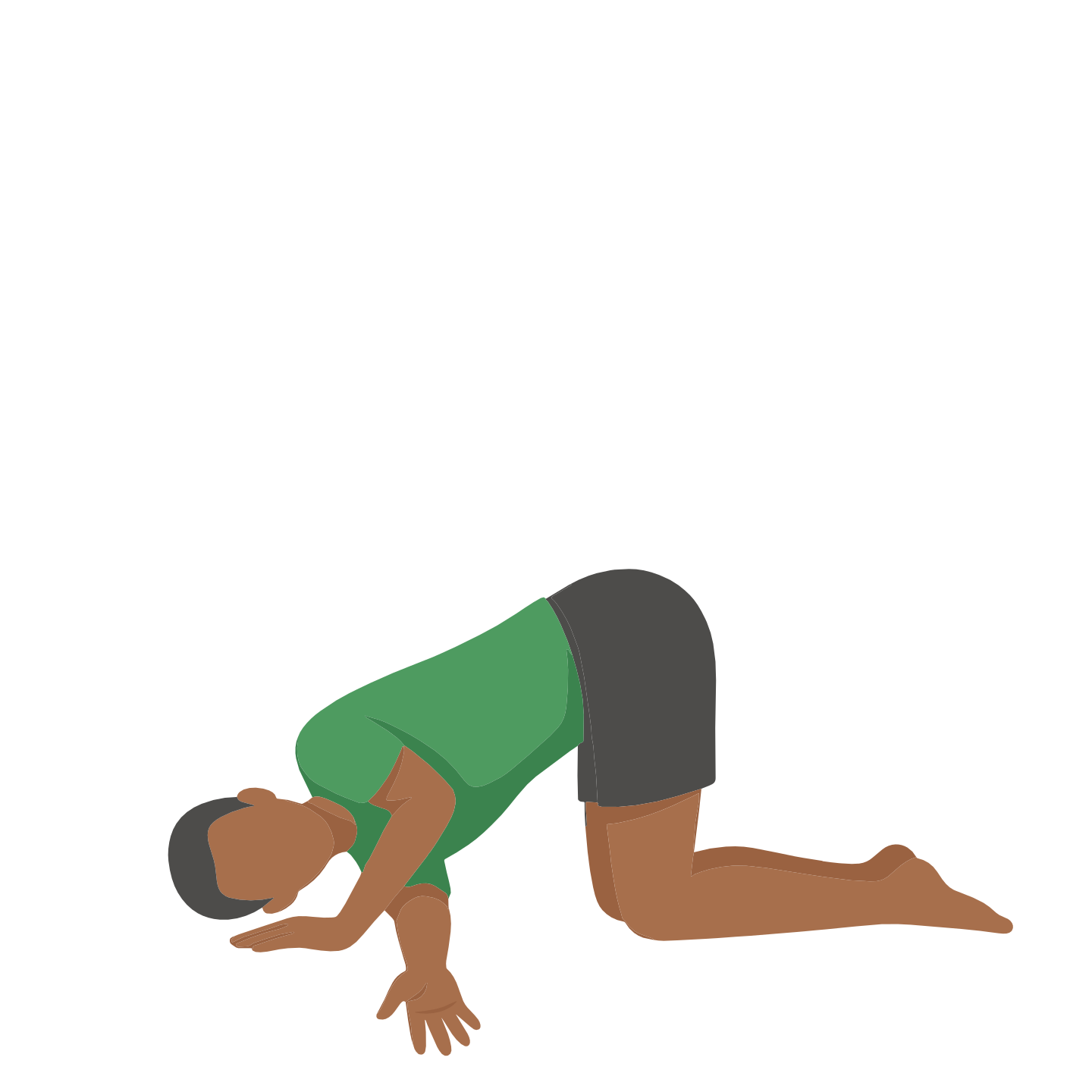
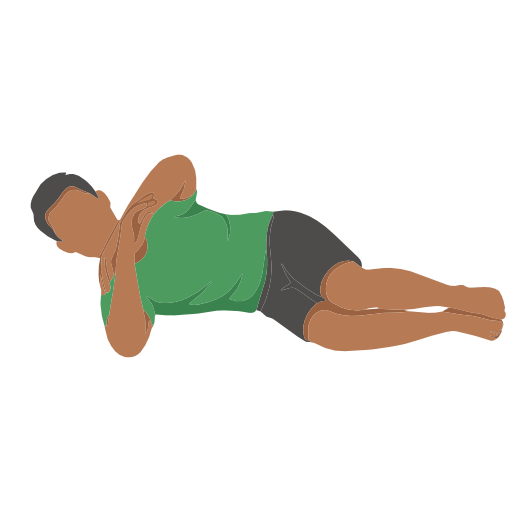
Thread the Needle
Mid-Back (Thoracic) · 30 seconds per side
  1. Start on all fours with wrists under shoulders
  2. Reach one arm toward the ceiling to open the chest
  3. Slide that arm underneath the body, threading through until the shoulder and ear rest on the mat
  4. Keep the hips high and stacked over the knees
  5. Hold, then slowly return and switch sides
Why it works
Thoracic mobility is essential for crossover dribbles and passing; losing it often leads to shoulder impingement.
7
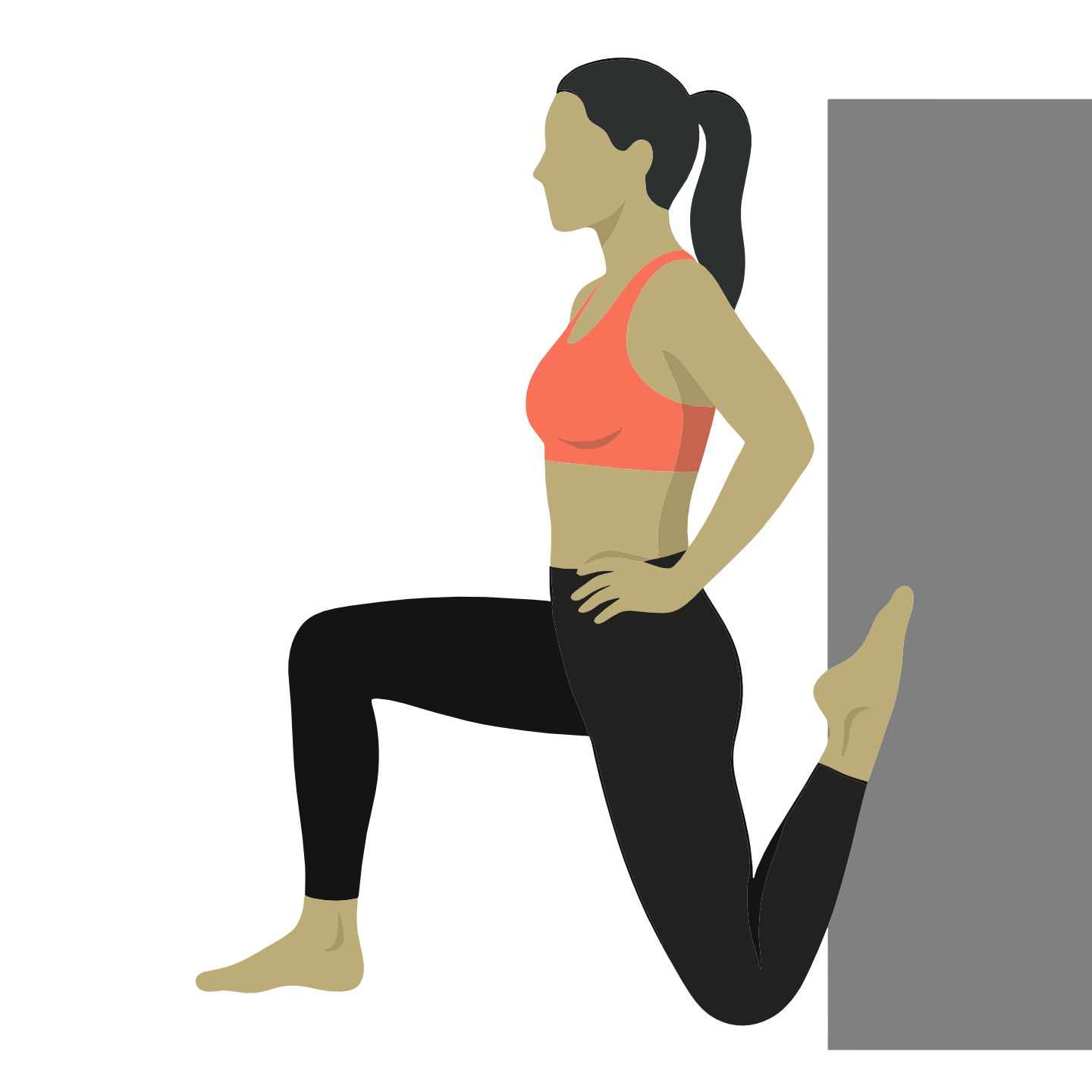
Couch Stretch
Quads and Hip Flexors · 60 seconds per side
  1. Kneel with one knee on the floor, resting the top of that foot against a wall or raised surface
  2. Step the opposite foot forward into a half-kneeling position
  3. Push your hips forward while keeping your torso upright
  4. Squeeze the glute of the rear leg to protect the lower back
  5. Hold for the full duration, then switch legs
Why it works
Maintaining quad length preserves your triple-extension power and reduces anterior knee stress.
8
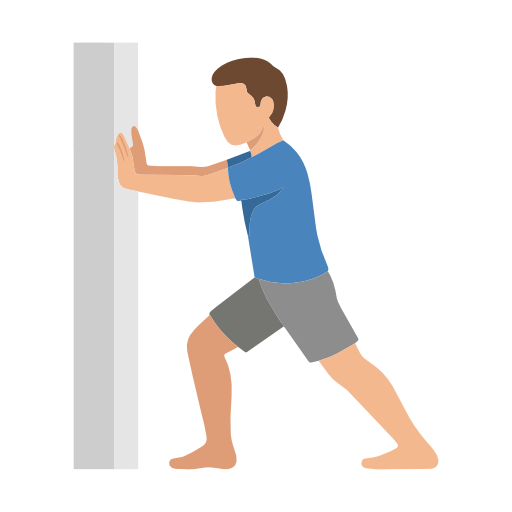
Calf Wall Stretch
Full Calf · 30 seconds each position
  1. Face a wall and step one foot back with the heel flat on the floor
  2. Keep the back leg straight to stretch the calf
  3. Lean hips forward until you feel the stretch in the back leg
  4. Hold, then switch legs
Why it works
Tight calves drive Achilles tendinopathy and reduce the ankle's ability to absorb landing impact.
9
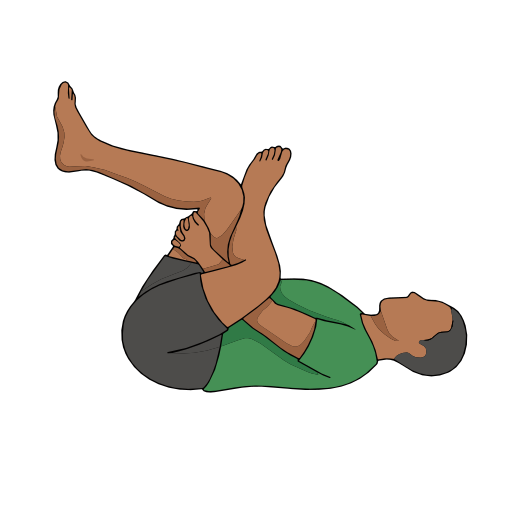
Lying Figure-4
Glutes and Hips · 60 seconds per side
  1. Lie on your back with both knees bent and feet flat on the floor
  2. Cross one ankle over the opposite knee in a figure-4 shape
  3. Pull the bottom thigh toward your chest, threading your hands through or around
  4. Keep your head and shoulders relaxed on the floor
  5. Hold, breathe deeply, then switch sides
Why it works
Tight glutes contribute to 'knee valgus', the primary mechanism for non-contact ACL tears.
10
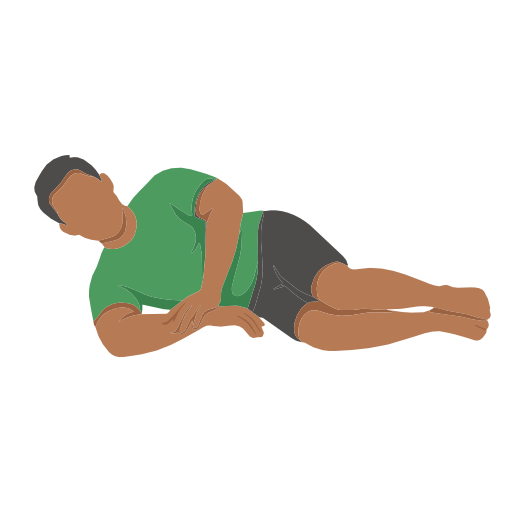
Sleeper Stretch
Posterior Shoulder · 30 seconds per side
  1. Lie on your side with the bottom arm extended straight out from the shoulder
  2. Bend the bottom elbow to 90 degrees, hand pointing toward the ceiling
  3. Use your top hand to gently press the bottom hand toward the floor (internal rotation)
  4. Stop when you feel a stretch in the back of the shoulder, do not force it
Why it works
Repetitive shooting and passing create posterior-capsule tightness, which is a risk factor for labral injury.
Source: JOSPT 2013

The Joint-by-Joint Approach

To stay healthy in a high-impact sport like basketball, you need to maintain mobility in your 'mobile' joints (ankles, hips, thoracic spine) so your 'stable' joints (knees, low back) don't have to compensate.[1]

If your ankles are stiff, your knees take the hit. If your hips are tight, your lower back suffers.

This routine is designed to keep the right joints doing the right jobs, ensuring that the force of your jumping and landing is distributed safely across your entire body.

Restoring Ankle Power

Ankle dorsiflexion (the ability to pull your toes toward your shin) is the most common mobility deficit in basketball. When this range is restricted, your body will find that mobility elsewhere, usually by 'collapsing' the arch of the foot or twisting the knee.[2]

The Wall Ankle Mobilization is your best defense. By restoring this joint glide, you give your ankles the capacity to absorb the massive landing forces of the game, significantly reducing your risk of a season-ending sprain or stress fracture.

Managing Shooting Symmetry

Because basketball is a game of repetition, especially for shooters, it's natural to develop asymmetries. Your shooting shoulder can become tight in the back, a condition called GIRD, which can eventually lead to 'pinching' or impingement.[3]

Maintenance moves like the Sleeper Stretch and Thread the Needle help reset your upper body symmetry. By keeping your thoracic spine and shoulder capsule mobile, you ensure that your shooting motion remains fluid and pain-free, even late in the season.

Frequently asked questions

How often should I do this mobility routine?
Three to five days per week is ideal. It's better to do five minutes every day than 30 minutes once a week.
Can I do these stretches on my bed?
It's best to do them on a firm surface like the floor or a gym mat to ensure you're getting the full range of motion.
What if my ankles are too stiff to touch the wall?
Start with your foot closer to the wall. As your mobility improves over weeks of consistency, move your foot further back.
Reach is launching soon
Audio cues, hold timers, and sport-specific routines built for athletes who want to stay healthy. Join the waitlist to be first to know when we launch.
1. Mason-Mackay AR et al. Journal of Science and Medicine in Sport. 2017
2. Jackson TJ et al. OJSM. 2013
3. Wilk KE et al. JOSPT. 2013

More Basketball guides

Cool-Down
Basketball Cool-Down Stretches: 10 Static Holds for Post-Game Recovery
Warm-Up
Basketball Warm-Up Stretches: 10 Dynamic Moves Before You Play