← Back to library
Biking·Cool-Down
·7 min read

Cool-Down Stretches for Cyclists

Post-ride recovery for cyclists must address hip flexor shortening and thoracic extension, the two most common structural adaptations that lead to chronic lower back pain and IT band syndrome.

After a ride, your hip flexors are at their shortest, your thoracic spine is stuck in flexion, and your IT band has been under lateral tension for miles. This cool-down sequence is designed to systematically undo those adaptations before they become permanent postural patterns.

The Recommended Routine

1
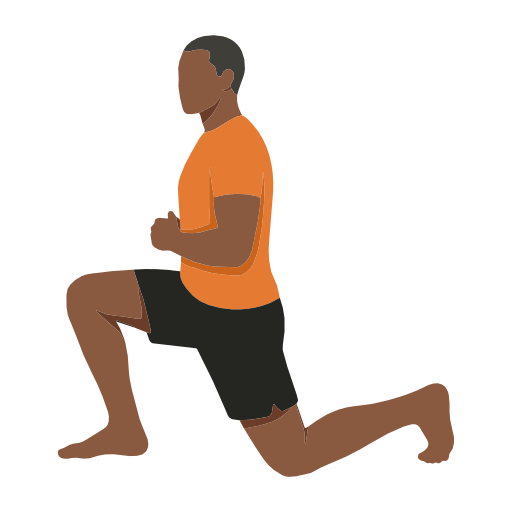
Half Kneeling Hip Flexor
Iliopsoas, rectus femoris, TFL · 30 seconds
  1. Assume a half-kneeling position (one knee down, one foot forward)
  2. Tuck your pelvis slightly (posterior tilt) to engage the glute of the down leg
  3. Shift your weight slightly forward without arching your lower back
  4. Maintain a tall posture
Why it works
THE single most important counter-stretch, cyclists' hip flexors are chronically shortened, pulling on the lumbar spine and inhibiting glute firing.
2
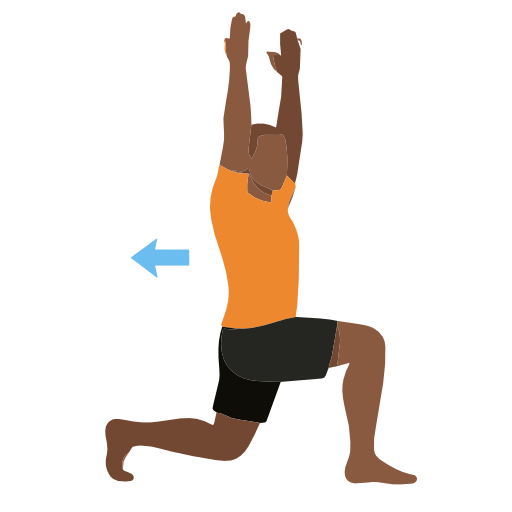
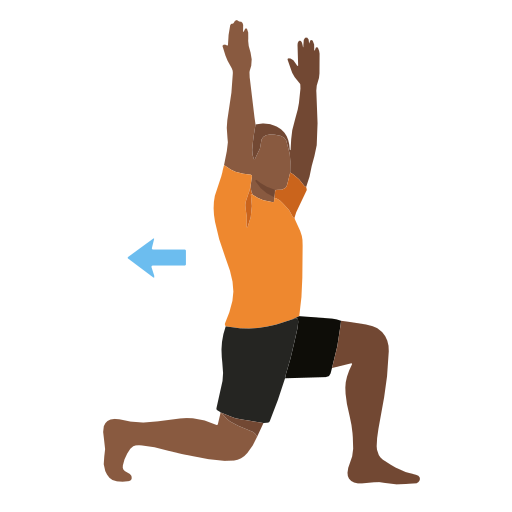
Reverse Lunge with Overhead Reach
Psoas, iliacus, QL, obliques, lats · 30 seconds per side
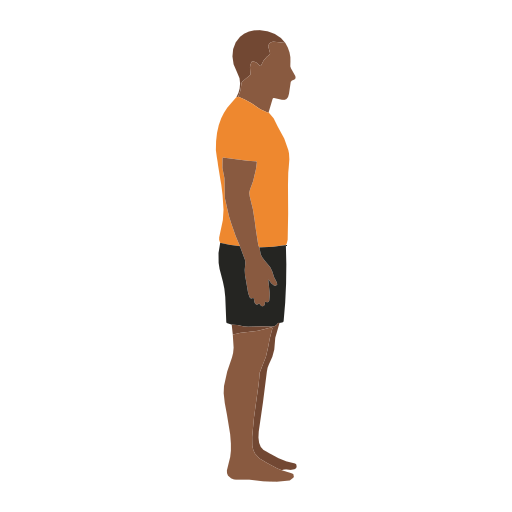
  1. Step backward into a lunge position, dropping the back knee close to the ground
  2. As you lunge, reach both arms straight overhead
  3. Push off the front heel to return to standing
  4. Alternate legs
Why it works
Adds a fascial-line element to deepen psoas release while opening the tight side-body, directly addresses anterior pelvic tilt.
3
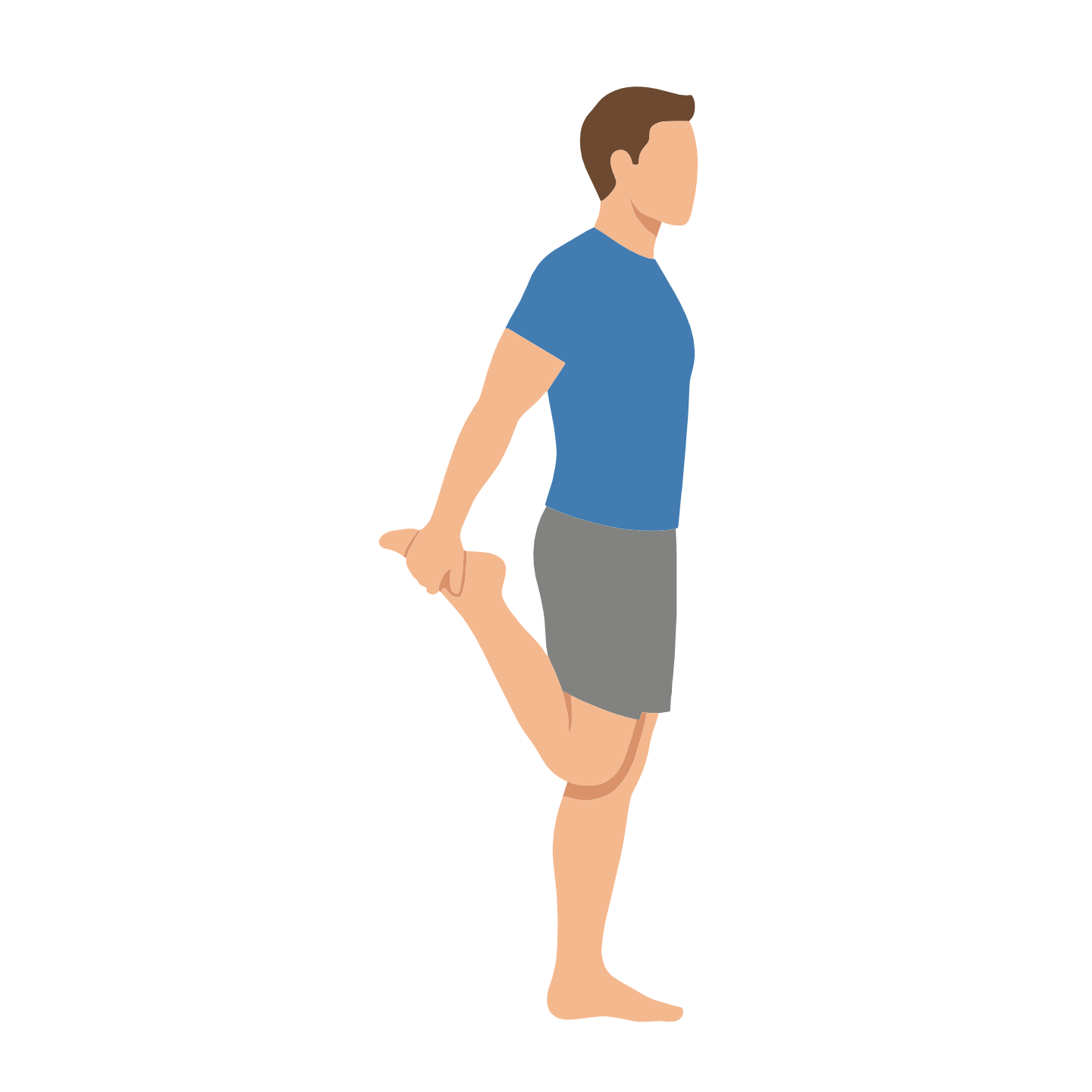
Standing Quad Stretch
Quadriceps · 30 seconds per side
  1. Stand on one leg, holding a wall or surface for balance if needed
  2. Pull the opposite ankle toward your glute, keeping knees together
  3. Stand tall, don't lean forward or arch the lower back
  4. Squeeze the glute of the stretched leg to deepen the hip flexor portion
  5. Hold, release, and switch legs
Why it works
Quads are primary pedal-stroke drivers and accumulate massive adaptive shortening; stretching reduces DOMS and improves patellar tracking.
4
Lying Figure-4
Glute max/med, piriformis, external rotators · 30 seconds per side
  1. Lie on your back with both knees bent and feet flat on the floor
  2. Cross one ankle over the opposite knee in a figure-4 shape
  3. Pull the bottom thigh toward your chest, threading your hands through or around
  4. Keep your head and shoulders relaxed on the floor
  5. Hold, breathe deeply, then switch sides
Why it works
Chronic piriformis tightness plus saddle pressure on the sciatic nerve causes referred leg pain; this supine version is gentler than pigeon.
5
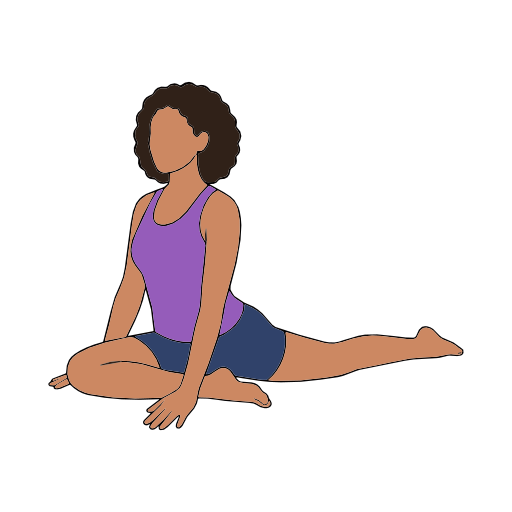
Pigeon Pose
Glutes, piriformis, hip flexors · 30-45 seconds per side
  1. From tabletop, slide one shin forward as close to parallel with the front of the mat as comfortable
  2. Extend the back leg straight behind you
  3. Square the hips toward the floor as much as possible
  4. Walk hands forward and lower the torso for a deeper hold
  5. Breathe slowly and deeply, hold for the full duration
Why it works
Double-duty, opens both tight front-leg glutes and shortened back-leg hip flexors in one pose.
6
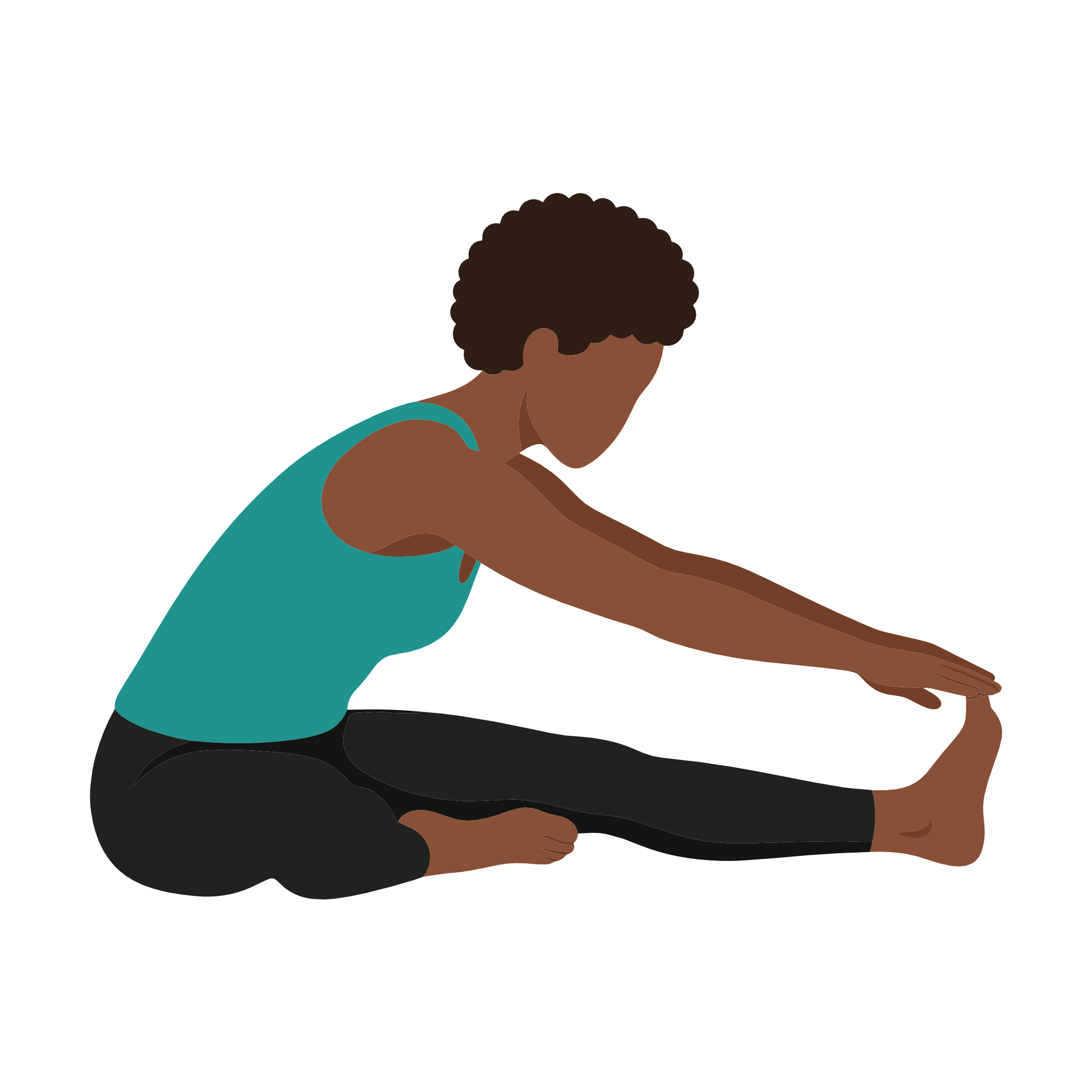
Seated Hamstring Fold
Hamstrings, gastrocnemius · 30 seconds
  1. Sit with one leg extended straight and the other bent inward
  2. Flex the foot of the extended leg, toes pointing up
  3. Hinge forward from the hips with a flat back, don't round the spine
  4. Reach toward the extended foot, stopping when the back begins to round
  5. Hold, breathe, and gradually inch forward
Why it works
Cycling keeps hamstrings in a shortened mid-range; restoring length balances pelvic tilt and reduces lower-back strain.
7
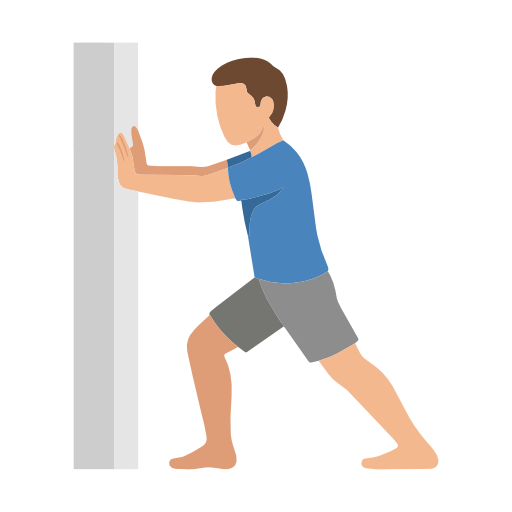
Calf Wall Stretch
Gastrocnemius, Achilles · 30 seconds per side
  1. Face a wall and step one foot back with the heel flat on the floor
  2. Keep the back leg straight to stretch the calf
  3. Lean hips forward until you feel the stretch in the back leg
  4. Hold, then switch legs
Why it works
Every pedal stroke loads the calves for plantarflexion, post-ride stretching prevents Achilles tendinopathy and post-ride cramping.
8
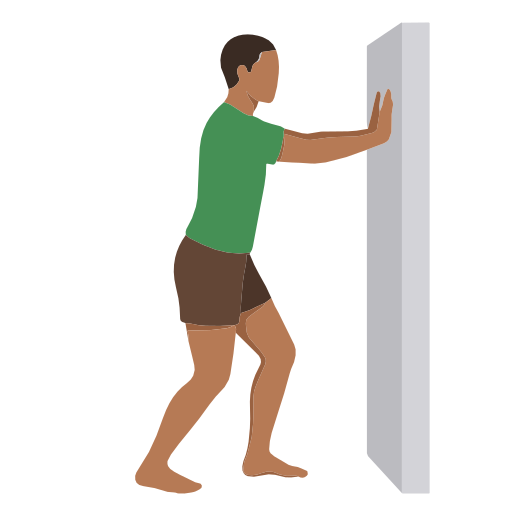
Soleus / Achilles Wall Stretch - Bent-Knee
Soleus, Achilles · 30 seconds per side
  1. Face a wall and step one foot back with the heel flat on the floor
  2. Bend the back knee while keeping the heel firmly down and toes slightly inward
  3. Press hips forward and slightly down
  4. Stretch is felt low on the calf, just above the heel
  5. Hold 30 seconds, 2–3× per side
Why it works
The deeper soleus is heavily used in sustained seated pedaling and is missed by standard straight-leg calf stretches, tight soleus limits dorsiflexion and disrupts pedal mechanics.
9
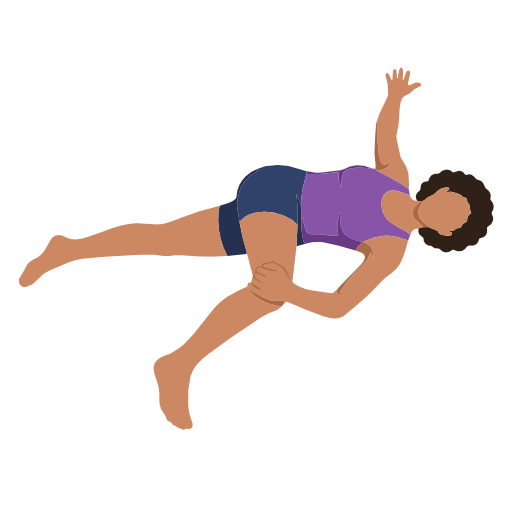
Supine Spinal Twist
Erectors, QL, obliques, glute medius, T-spine rotators · 30 seconds per side
  1. Lie on your back and draw one knee toward your chest
  2. Gently guide that knee across your body toward the opposite floor
  3. Extend the same-side arm out to a 'T' to keep the shoulder grounded
  4. Keep both shoulder blades on the floor throughout
  5. Breathe deeply and allow gravity to deepen the twist
Why it works
Decompresses the lumbar spine after sustained flexion and mobilizes the stiff thoracic spine, plus releases the QL, a common post-ride ache site.
10
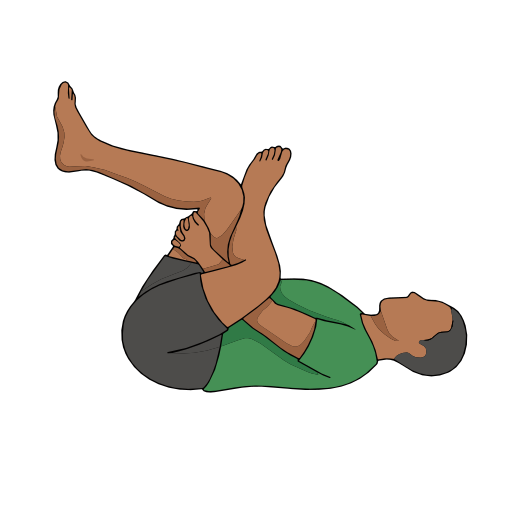
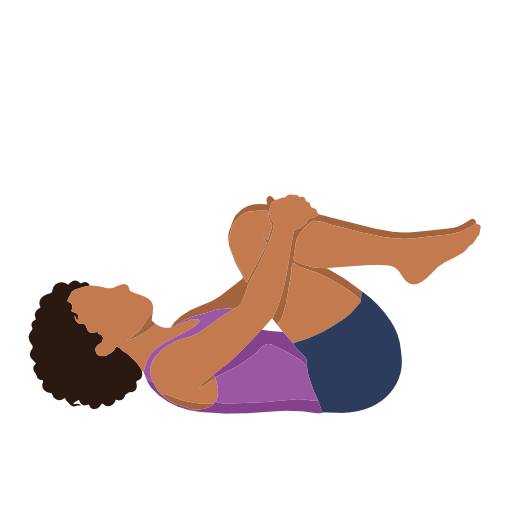
Double Knees to Chest
Lumbar erectors, glutes, lower-back fascia · 30 seconds
  1. Lie on your back
  2. Bring both knees up toward your chest and wrap your arms around your shins
  3. Gently pull your knees closer to stretch the lower back
  4. Keep your head relaxed on the floor
Why it works
Direct decompression for lumbar discs after sustained flexion, opens intervertebral spaces compressed by the forward-bent position.
11
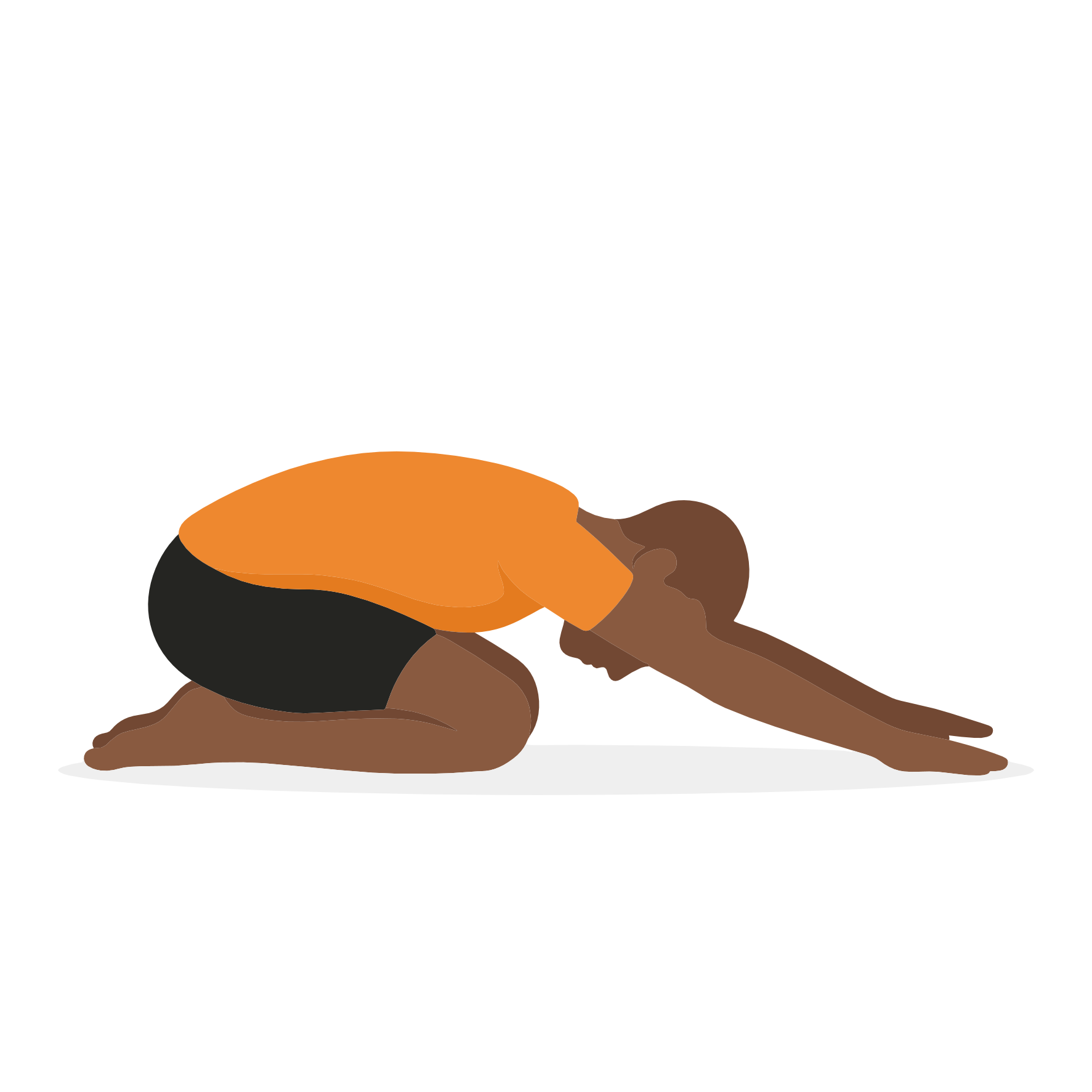
Child's Pose
Lumbar extensors, lats, posterior shoulders, glutes · 30-60 seconds
  1. Kneel and sit back on your heels, spreading the knees wide or together
  2. Reach both arms forward along the floor
  3. Rest your forehead on the mat and allow the spine to lengthen
  4. Breathe deeply into the back body, expanding with each inhale
  5. Hold for 60 seconds or longer for a deeper release
Why it works
Passive posterior-chain decompression after long climbs; activates parasympathetic recovery.
12
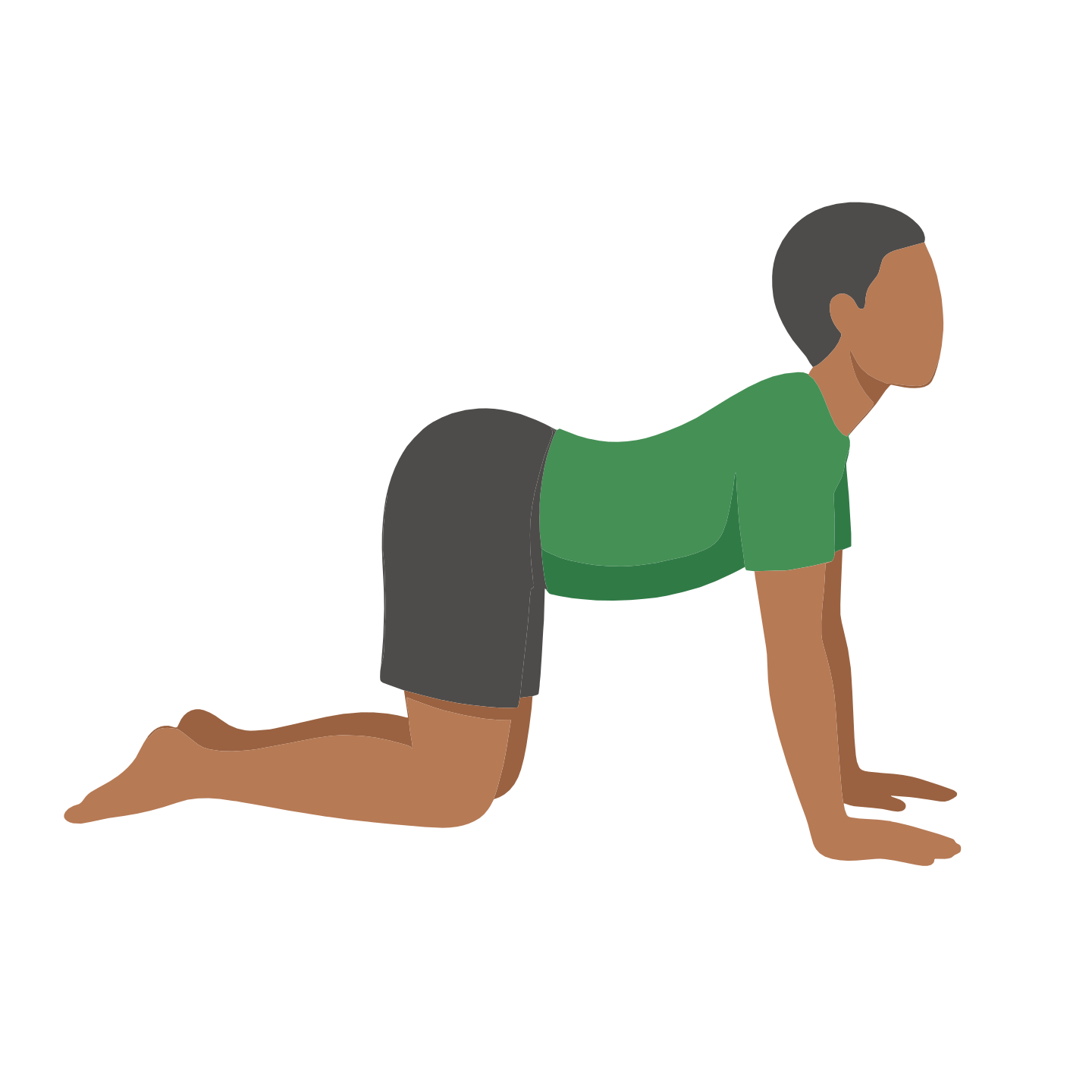
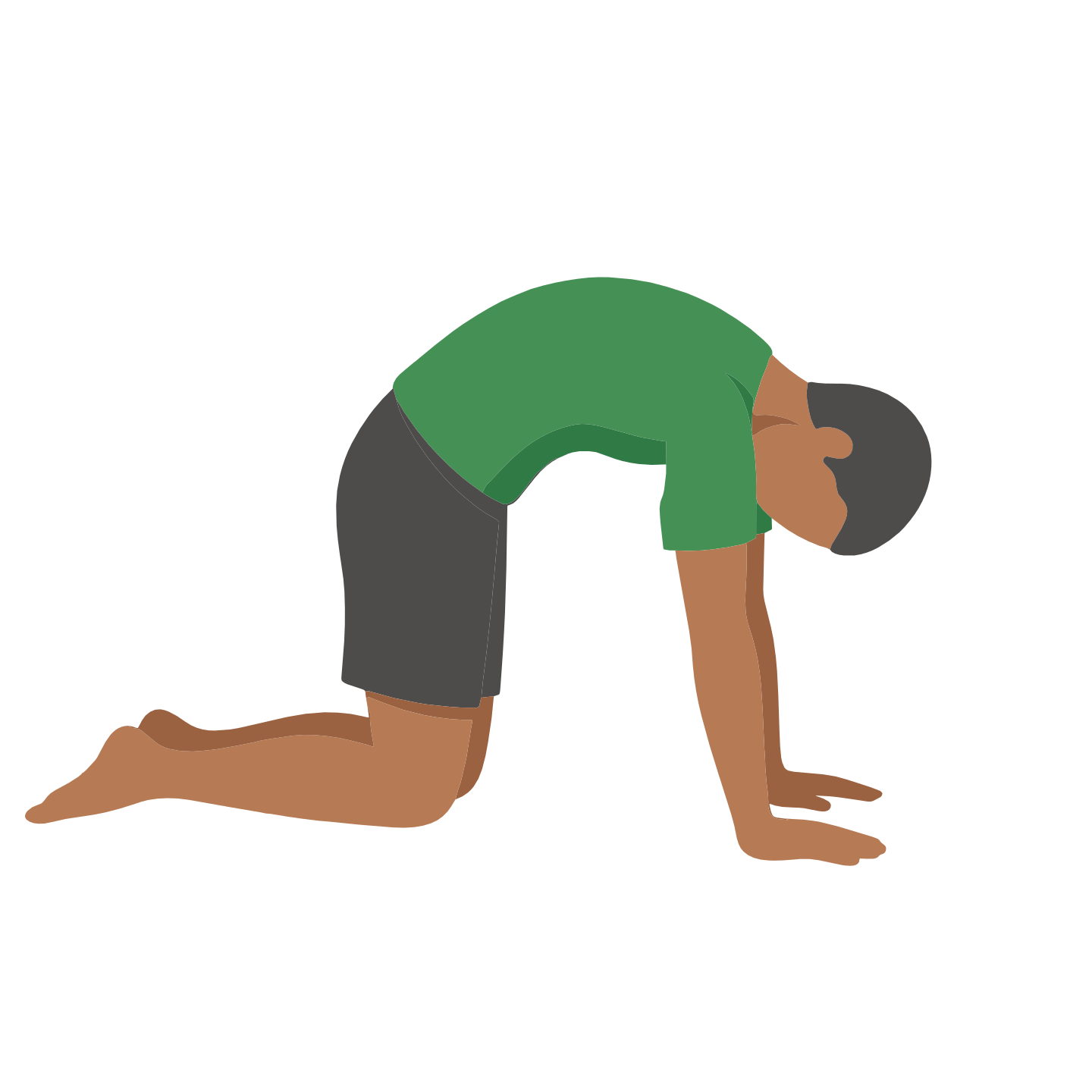
Cat-Cow Flow
Full spine, abdominals, shoulder girdle · 10 cycles
  1. Start on all fours, wrists under shoulders, knees under hips
  2. Inhale: let the belly drop toward the floor and lift the head (Cow)
  3. Exhale: round the spine toward the ceiling, tuck the chin (Cat)
  4. Move slowly and in sync with your breath
  5. Feel each vertebra articulate individually
Why it works
THE key counter-mobilizer for constant spinal flexion, restoring thoracic extension and cervical mobility lost over hours on the bars.
13
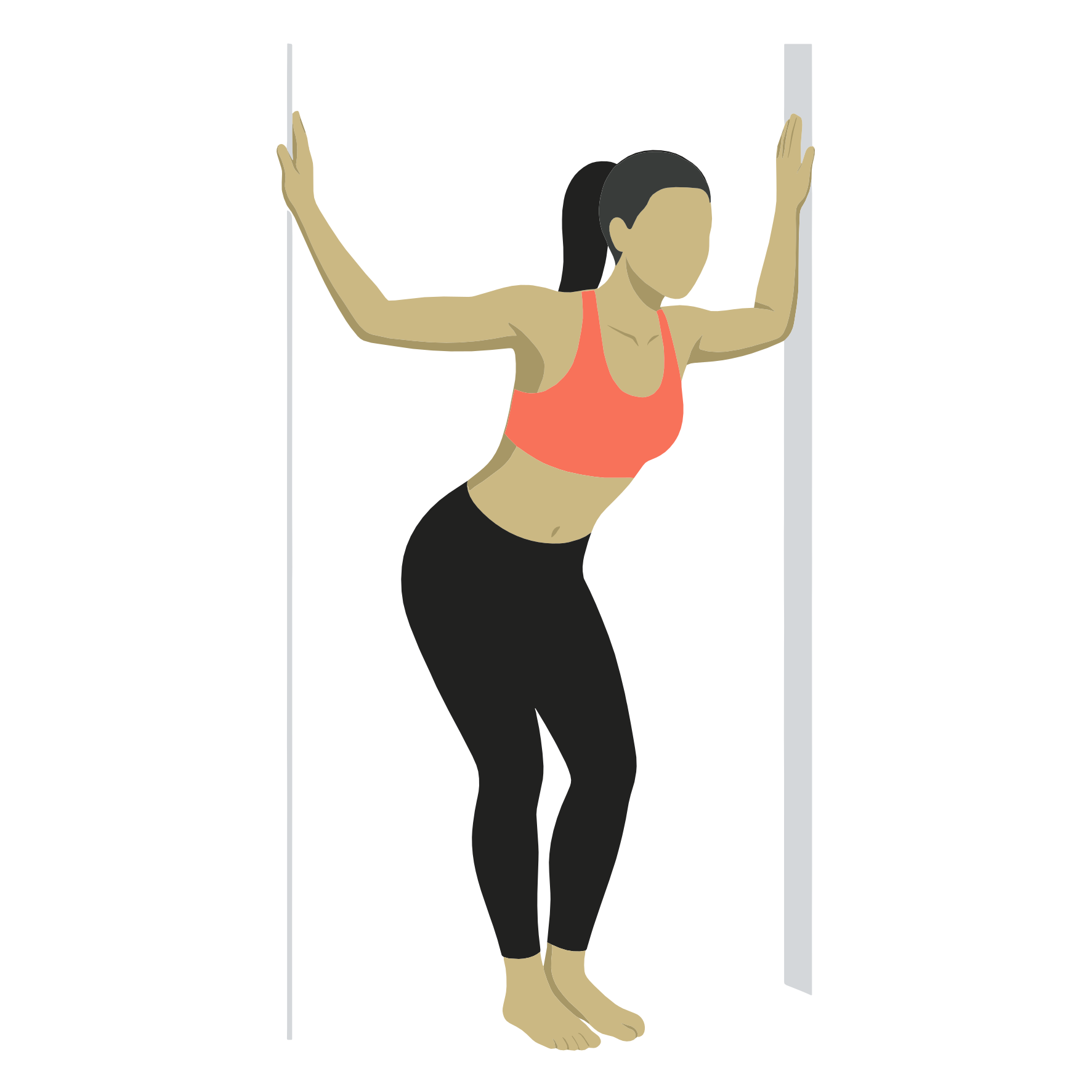
Doorway Chest Stretch
Pectoralis major/minor, anterior deltoid · 30 seconds x 2
  1. Place hands on a wall, chair, or door frame at shoulder height
  2. Lean your torso forward between your arms until a stretch is felt across the chest
  3. Keep a slight bend in the elbows
  4. Hold the stretch without bouncing
  5. Breathe deeply and let the chest expand with each inhale
Why it works
Directly reverses upper-crossed cyclist hunch, the #1 counter-stretch for off-bike posture and neck/upper-back tension.
14
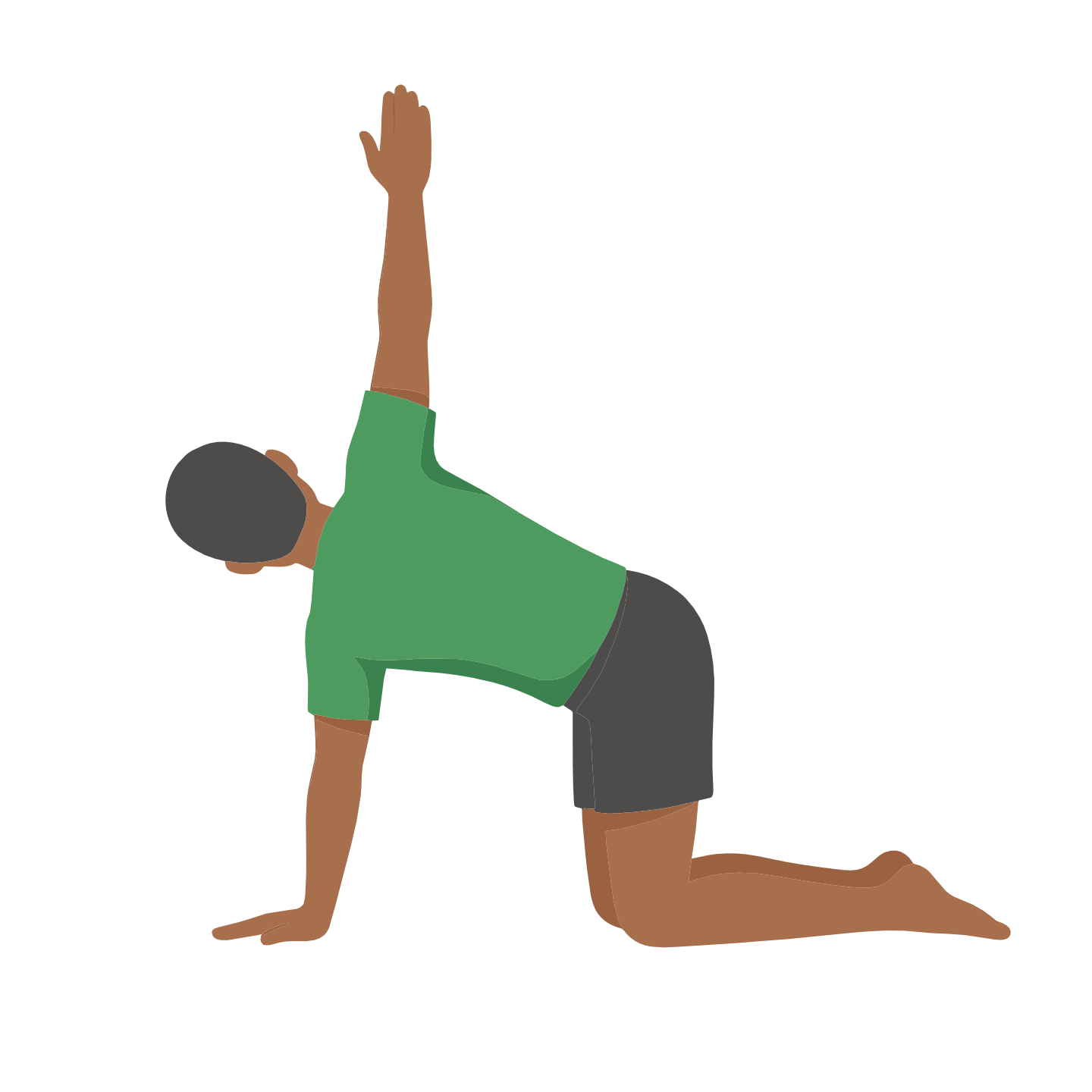
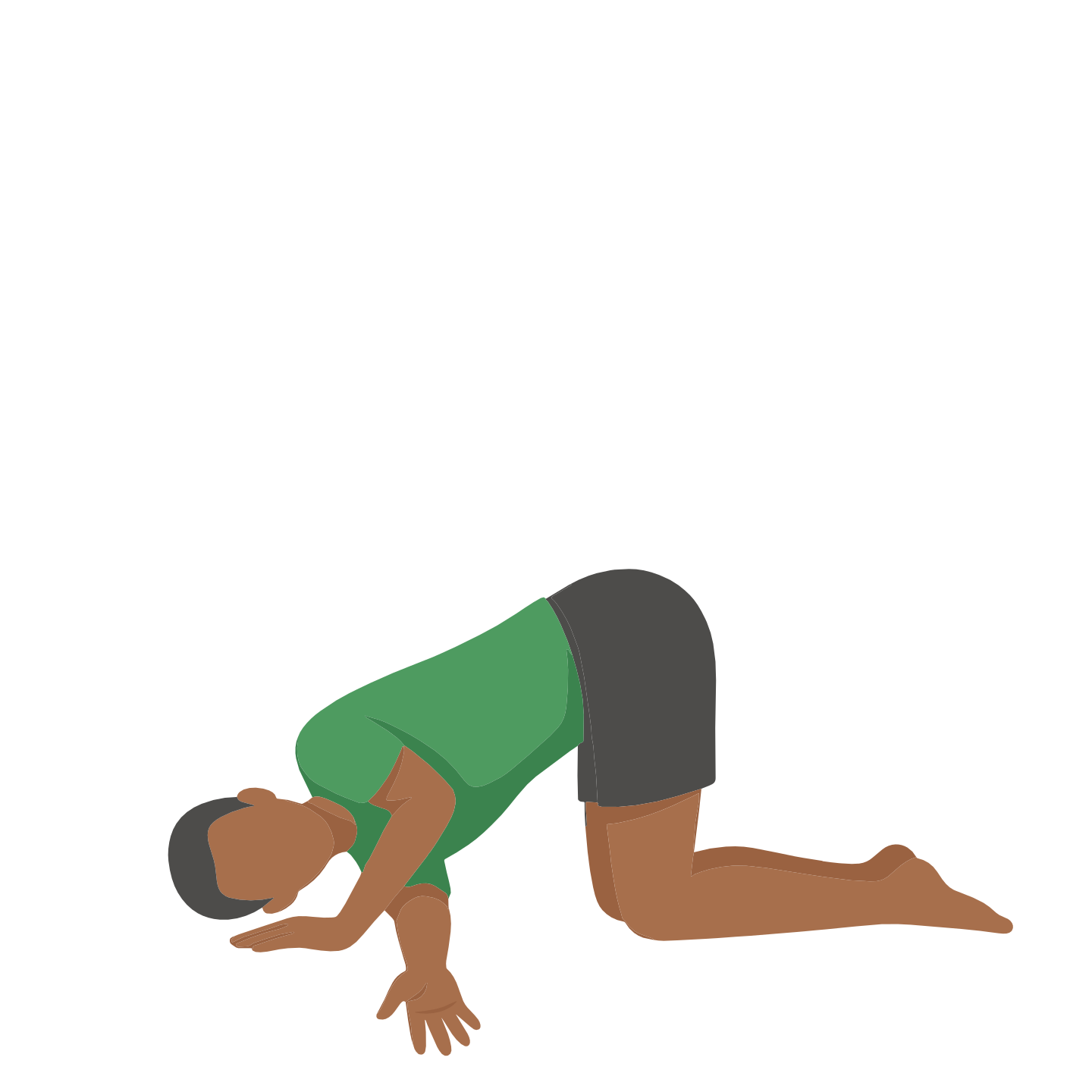
Thread the Needle
Thoracic rotators, rhomboids, mid/lower traps, lats · 30 seconds per side
  1. Start on all fours with wrists under shoulders
  2. Reach one arm toward the ceiling to open the chest
  3. Slide that arm underneath the body, threading through until the shoulder and ear rest on the mat
  4. Keep the hips high and stacked over the knees
  5. Hold, then slowly return and switch sides
Why it works
Restores T-spine rotation lost to sustained flexion; releases overstretched rhomboids and tight lats from the hunched position.
15
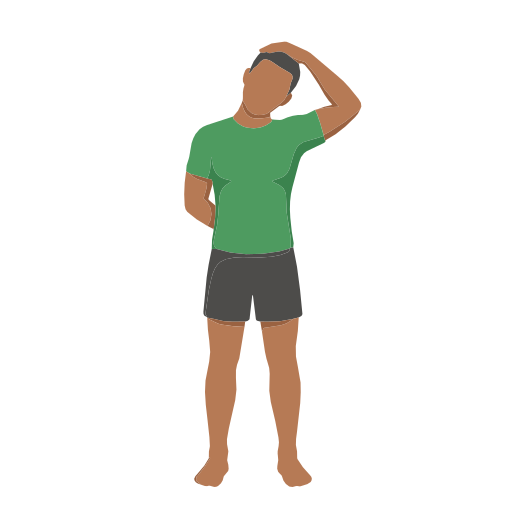
Upper Trapezius Stretch
Upper trap, levator scapulae, scalenes · 20-30 seconds per side
  1. Sit or stand tall with one arm reaching behind your back
  2. Use the other hand to gently guide the head toward the opposite shoulder
  3. Keep the far shoulder down and relaxed, don't let it shrug up
  4. Tilt your ear toward your shoulder, do not force
  5. Hold the stretch and breathe, then switch sides
Why it works
Cyclists hyperextend the neck for hours to see the road, overloading upper traps and levators, prevents tension headaches and stiff neck.
Source: NIH 2023

Why Cyclists Need More Than a Quick Stretch

Cycling holds your body in a sustained, unnatural position. Unlike sports where the body moves through a full range of motion, the bike locks you in hip flexion for the entire session. The longer the ride, the more your nervous system ingrains that position.[1]

A 10-minute cool-down is not optional maintenance. It is the corrective intervention that tells your nervous system the ride is over and the body can return to neutral alignment.

The Hip Flexor Priority

The psoas, your primary hip flexor, runs from your lumbar spine to the top of your femur. On the bike, it is permanently contracted. When you get off the bike with tight psoas muscles, your pelvis tips forward, your lower back arches to compensate, and disc pressure increases with every step you take.[2]

The Couch Stretch and Half Kneeling Hip Flexor stretch are non-negotiable after any ride over 45 minutes.

This is why these two movements appear at the top of this routine. They are not luxury items, they are structural maintenance.

Reversing the Cycling Hunch

Aero position is efficient on the bike. Off the bike, it becomes a postural liability. The thoracic spine adapts to the flexed position, the chest tightens, and the shoulders round forward permanently.[3]

The Thoracic Extension over Chair and Seated Spinal Twist are specifically designed to pull the mid-back out of this pattern. If you only have time for one movement after a ride, the thoracic extension is it.

Frequently asked questions

How soon after my ride should I stretch?
Ideally within 10 minutes while your muscles are still warm. If you cool down completely first, do 5 minutes of light movement to re-warm the tissue before holding static stretches.
Is the Couch Stretch really necessary after every ride?
Yes, especially after rides over 45 minutes. The hip flexors shorten measurably with every hour in the saddle. Without regular stretching, this becomes structural over months.
My lower back always hurts after rides. What should I prioritize?
Start with the Couch Stretch, Thoracic Extension over Chair, and Seated Spinal Twist. These three directly address the three causes of cycling-related lower back pain: hip flexor tightness, thoracic stiffness, and lumbar compression.
Reach is launching soon
Audio cues, hold timers, and sport-specific routines built for athletes who want to stay healthy. Join the waitlist to be first to know when we launch.
1. Bini et al. Journal of Science and Cycling. 2014
2. Dahlquist et al. Journal of Physical Therapy Science. 2015
3. Wilber et al. The American Journal of Sports Medicine. 1995

More Biking guides

Mobility
Rest-Day Mobility Stretches for Cyclists
Warm-Up
Pre-Ride Warm-Up Stretches for Cyclists